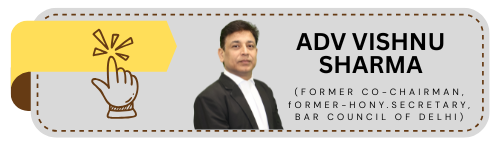
You completed your work, delivered the goods, or lent money to someone. In return, you received a cheque with a promise that the payment would be cleared. But when you deposited the cheque, your bank returned it unpaid. Now the person who gave you the cheque may not be answering your calls or may be asking for more time. A bounced cheque can create financial problems, especially when you depend on that payment for your business or personal needs. A Cheque Bounce Lawyer in Tis Hazari Court can help you understand your legal rights, prepare a cheque bounce legal notice, file a complaint under Section 138 of the Negotiable Instruments Act, 1881, or defend a case filed against you. Cheque bounce cases involve strict legal deadlines. Missing an important date can affect your ability to take action. Advocate Dr. Vishnu Sharma of LawVS Law Firm has over 15 years of professional experience and provides legal assistance in Delhi for cheque bounce complaints, payment disputes, legal notices, money recovery, and related court proceedings. A cheque bounce lawyer can help you take legal action when a cheque issued against a legally enforceable debt or liability is returned unpaid. Not every cheque bounce case has the same facts. For example, a business owner may receive a cheque against an unpaid invoice. Another person may receive a cheque for repayment of a personal loan. Sometimes, the person who issued the cheque may have a genuine defence and may need legal assistance to respond to the complaint. A lawyer can assist with: Cheque Bounce Legal Notices: Preparing statutory payment demand notices. Section 138 Complaints: Filing cheque dishonour cases before the competent Magistrate. Cheque Bounce Defence: Responding to notices, summons, and complaints. Business Payment Disputes: Handling dishonoured cheques issued against business liabilities. Personal Loan Cheques: Examining unpaid loan transactions supported by cheques. Company Cheque Cases: Reviewing the liability of companies and responsible officers. Interim Compensation: Advising on applications under Section 143A of the NI Act. Cheque Bounce Settlements: Preparing lawful payment and settlement arrangements. Cheque Bounce Appeals: Advising on challenges to eligible judgments and orders. Related Money Recovery: Examining whether a separate civil recovery remedy is available. The first step is to check the cheque date, bank return memo, reason for dishonour, and the underlying transaction. A cheque bounce case arises when a cheque issued towards a legally enforceable debt or liability is dishonoured and the statutory requirements for an offence under Section 138 are satisfied. Section 138 of the Negotiable Instruments Act, 1881 deals with certain cases of cheque dishonour. For example, a supplier sells goods worth ₹3 lakh. The buyer gives a cheque for the outstanding payment. When the supplier deposits it, the cheque is returned because the buyer's account does not contain sufficient funds. If the legal requirements are met, the supplier may consider filing a Section 138 complaint. Does every bounced cheque automatically become a criminal offence? No. The legal ingredients must be satisfied, including the existence of a legally enforceable debt or liability, the required notice, and non-payment within the statutory period. Can a cheque bounce case be filed for a personal loan? Yes, where the cheque was issued towards a legally enforceable loan liability and the other statutory conditions are met. A bank may return a cheque unpaid for several reasons, but the legal consequences depend on the return reason and the circumstances. Common reasons include: Insufficient Funds The account does not contain enough money to honour the cheque. Exceeds Arrangement The cheque amount exceeds the payment arrangement permitted by the bank. Account Closed The account on which the cheque was drawn has been closed. Stop Payment Instructions The account holder has instructed the bank not to honour the cheque. Signature Difference The bank returns the cheque because the signature does not match its records. Technical Problems The cheque may have an incorrect date, incomplete details, or another technical defect. Can a Section 138 case be filed when the cheque is returned for a reason other than insufficient funds? In certain circumstances, yes. Courts have held that particular return reasons, including account closure, stop-payment instructions, and some signature-related dishonours, may attract Section 138 when the legal requirements are satisfied. However, every return reason should be examined carefully. A technical rejection does not automatically establish the offence. After a cheque is returned unpaid, collect the bank return memo, check the legal deadlines, and review the transaction for which the cheque was issued. Do not delay merely because the person who issued the cheque promises to pay soon. For example, a customer may tell a supplier that payment will be made after another 20 days. The supplier should still check whether the statutory notice deadline is approaching. Important steps include: Keep the original cheque safely. Obtain the bank return memo. Note the date when the bank informed you about the dishonour. Check the reason for return. Collect the agreement, invoice, or loan records. Preserve messages concerning payment. Calculate the statutory notice deadline. Consider sending the required legal demand notice. Keep proof of notice dispatch and delivery. File the complaint within the applicable limitation period if payment is not made. Should you wait for the cheque issuer to call you back? A reasonable attempt to resolve the matter may be useful, but waiting should not cause you to miss statutory deadlines. Section 138 requires a written demand notice within 30 days of receiving information about dishonour, followed by a 15-day payment period after receipt of notice. If the drawer does not make the required payment, the complainant must ordinarily file the complaint within one month after the cause of action arises. The main deadlines are: Cheque Presentation A cheque must be presented within its applicable validity period. For ordinary cheques in India, banks generally recognise a three-month validity period from the cheque date. Legal Notice The payee must send the statutory demand notice within 30 days of receiving information from the bank about the cheque being returned unpaid. Payment Opportunity The drawer has 15 days from receipt of the notice to make payment of the cheque amount. Complaint Filing If payment is not made within those 15 days, the cause of action arises. The complaint must ordinarily be filed within one month thereafter. Can you file a cheque bounce complaint immediately after sending the notice? No. The statutory payment period must be allowed to expire. Can a complaint be filed after the limitation period? Section 142 permits a court to take cognizance of a delayed complaint where sufficient cause for delay is established. However, condonation is not automatic. A cheque bounce legal notice is a written demand asking the drawer to pay the dishonoured cheque amount within the statutory period. The notice is an important step before filing a Section 138 complaint. For example, a trader receives a cheque for ₹2 lakh against supplied goods. After dishonour, the trader may issue a legal notice identifying the cheque, the unpaid amount, and the transaction. A properly prepared notice generally includes: Name and address of the parties. Cheque number. Cheque date. Bank details. Cheque amount. Reason for dishonour. Date of bank return information. Nature of the outstanding liability. Clear demand for payment of the cheque amount. Reference to the 15-day statutory payment period. Is a legal notice compulsory before a Section 138 complaint? Yes. The required statutory demand notice is a condition of a valid Section 138 prosecution. Can additional legal expenses be demanded in the notice? A notice may mention other claimed amounts where appropriate, but the statutory demand for the dishonoured cheque amount should be clear and identifiable. A person who receives a cheque bounce notice is not automatically convicted because they do not reply. However, failing to pay the legally demanded cheque amount within the statutory period can allow the complainant to proceed with a Section 138 complaint. For example, a borrower receives a legal notice concerning a ₹5 lakh cheque. The borrower does not make payment within 15 days. After the statutory period expires, the lender may file a complaint if all legal requirements are satisfied. Is replying to a cheque bounce notice compulsory? The law does not require a reply merely for the sake of replying. However, a response may be useful where the demand is disputed or important facts need to be placed on record. Can you challenge a false cheque bounce notice? Yes. The person receiving the notice may examine whether a legally enforceable debt existed and whether the cheque was properly used. A Section 138 cheque bounce complaint is generally filed by the payee or holder in due course before the competent Magistrate after the statutory requirements have been completed. The complaint should explain the cheque transaction, dishonour, notice, and failure to make payment. The usual process includes: Examine the Transaction: Confirm the nature of the legally enforceable liability. Check the Cheque: Review its date, amount, signature, and other relevant details. Review the Return Memo: Verify when and why the cheque was dishonoured. Send the Statutory Notice: Follow the 30-day notice requirement. Wait for the Payment Period: Allow 15 days after receipt of notice. Check Jurisdiction: Identify the competent Magistrate under Section 142. Prepare the Complaint: Include relevant facts and supporting documents. File Within Limitation: Complete filing within the prescribed period. Pre-Summoning Procedure: The court examines the complaint according to law. Summons and Trial: The accused may be summoned and proceedings continue. Judgment or Settlement: The case may end through a judicial decision or lawful settlement. Is a police FIR compulsory for cheque bounce? No. A Section 138 case ordinarily proceeds through a complaint before the competent Magistrate rather than through a police FIR. Separate criminal allegations may require different legal analysis. For cheques deposited for collection through the payee's bank account, jurisdiction is generally linked to the branch where the payee maintains that account. Section 142(2) of the Negotiable Instruments Act governs the territorial jurisdiction of cheque bounce cases. For example, a business may have its office in Rajouri Garden, while the cheque issuer lives in Noida. If the cheque is deposited for collection through the business's bank account, the location of the relevant account-maintaining branch can be decisive. Does the cheque issuer need to live near Tis Hazari Court? No. The drawer's residential address alone does not decide jurisdiction when the cheque is collected through the payee's bank account. What if the cheque is presented directly to the drawer's bank rather than through the payee's account? A different rule applies under Section 142(2)(b). In that situation, jurisdiction is generally connected with the branch of the drawee bank where the drawer maintains the account. Can every cheque bounce case in Delhi be filed at Tis Hazari? No. The relevant bank branch, statutory jurisdiction rules, and case allocation must be examined. Yes. Tis Hazari Courts have Magistrate Courts dealing with cheque bounce cases, including courts assigned matters under the Negotiable Instruments Act. However, the complaint must fall within the jurisdiction of the appropriate court. For example, a cheque deposited through a payee account maintained at a bank branch within the relevant Tis Hazari jurisdiction may be eligible for filing there. The exact filing court should be confirmed through current court allocation and applicable statutory provisions. Where is Tis Hazari Court located? Tis Hazari Courts Complex is located at Tis Hazari, Delhi-110054. Are there separate courts for cheque bounce cases? Yes. Specific Magistrate Courts may be assigned to NI Act matters, and digital courts may also handle eligible proceedings. The main documents are the original cheque, bank dishonour memo, statutory demand notice, and proof concerning the underlying debt or liability. The documents may vary depending on the transaction. For a personal loan, bank transfer records and written acknowledgments may be relevant. For a business payment, invoices and delivery documents may help establish the liability. Common documents include: Original dishonoured cheque. Bank return memo. Copy of the legal demand notice. Postal receipt or other dispatch proof. Delivery information, where available. Loan agreement or written acknowledgment. Bank statements. Tax invoices. Purchase orders. Delivery challans. Account ledgers. Relevant WhatsApp or email communications. Company authorisation documents, where applicable. Can you file a cheque bounce case without a written loan agreement? Possibly. Other evidence and statutory presumptions may be relevant, depending on the facts. Is the original cheque important? Yes. The original instrument may be required during proceedings, subject to court procedure and evidentiary rules. Yes. A cheque issued towards an unpaid business invoice may support a Section 138 complaint when the legal conditions are satisfied. For example, a manufacturer supplies goods worth ₹8 lakh to a distributor. The distributor issues a cheque to clear the outstanding invoice. The bank returns the cheque unpaid. The manufacturer may consider a statutory demand notice and complaint. Relevant records may include: Tax invoices. Delivery challans. Transport receipts. Purchase orders. GST-related transaction records. Account statements. Payment correspondence. Can the supplier also file a civil recovery case? A separate civil or commercial recovery remedy may be available, subject to the applicable legal requirements. Does a Section 138 complaint automatically recover the money? No. The complaint involves criminal liability under the NI Act. Recovery, compensation, and enforcement depend on court orders, settlement, and other legal remedies. Yes. A company may face Section 138 proceedings when a cheque issued on its behalf is dishonoured and the statutory requirements are met. Section 141 of the Negotiable Instruments Act deals with offences involving companies. The company and persons who meet the statutory requirements may face proceedings. For example, a private limited company may issue a cheque to a supplier against outstanding invoices. If the cheque is dishonoured, the supplier may need to examine the company's liability and the legal position of the persons involved. Are all company directors automatically guilty? No. The statutory requirements concerning responsibility for the conduct of the company's business must be considered. The role of the cheque signatory may also be important. Should the company be included in the complaint? The correct array of accused should be examined carefully. In cases seeking vicarious liability under Section 141, arraigning the company is ordinarily a necessary legal requirement. Yes, in certain circumstances. Merely describing a cheque as a security cheque does not automatically prevent Section 138 proceedings. The important question is whether a legally enforceable debt or liability existed when the cheque became payable and was presented. For example, a borrower may give a cheque as security for repayment of a loan. If the loan becomes due and the cheque is presented against that outstanding liability, Section 138 may apply. However, if no legally enforceable amount was due, the person who issued the cheque may have a defence. Can every security cheque be used to file a criminal complaint? No. The transaction, purpose of the cheque, and legally enforceable liability must be examined. A blank signed cheque may become relevant in Section 138 proceedings, but its legal effect depends on the facts and evidence. For example, a person may sign a cheque and hand it over during a business transaction without filling in the amount. Later, a dispute may arise about how the cheque was completed or used. The court may examine: Whether the signature is admitted. Why the cheque was handed over. Whether a legally enforceable liability existed. Whether the amount claimed was actually due. Supporting transaction documents. Evidence rebutting the statutory presumption. Does signing a blank cheque automatically prove the full amount claimed? No. Statutory presumptions may arise, but they are rebuttable. A person may present a legally recognised defence supported by the facts. Section 139 creates a rebuttable presumption that the holder received the cheque towards the discharge of a debt or other liability. This provision is important in cheque bounce proceedings. For example, a borrower admits signing a cheque but claims that no amount was actually due. The court may apply the statutory presumption and examine whether the accused has rebutted it. Does the complainant automatically win because the accused admits the signature? No. The statutory presumption assists the complainant, but it does not make conviction automatic. Can the accused challenge the existence of the debt? Yes. The accused may use relevant evidence and circumstances to rebut the presumption according to the applicable standard. If you receive a Section 138 notice or court summons and believe the claim is incorrect, examine the documents and prepare a timely legal response. For example, a person may claim that a cheque was issued against an unpaid loan. You may have already repaid the loan or may dispute the amount demanded. A defence may require examination of: Payment receipts. Bank statements. Loan records. Cheque issuance circumstances. Settlement communications. Demand notice. Relevant court documents. Can you ignore a cheque bounce summons if the claim is false? No. Ignoring a court summons can create additional procedural difficulties. Can a cheque bounce complaint be dismissed if no legally enforceable debt existed? The absence of a legally enforceable debt may be a valid defence, but the court decides the matter after considering the evidence and applicable law. Section 143A allows a court to order interim compensation of up to 20% of the cheque amount in eligible Section 138 proceedings. This relief is discretionary, not automatic. For example, a complainant may request interim compensation during a pending cheque bounce trial. The court may examine the circumstances and statutory requirements. Does the accused have to pay 20% in every cheque bounce case? No. The court must exercise its discretion according to law. Is interim compensation the final decision in the case? No. The main complaint continues, and the court must decide the allegations. If the accused is acquitted, the law provides for repayment of interim compensation with the applicable interest. Section 138 provides for imprisonment up to two years, a fine up to twice the cheque amount, or both, when the offence is proved. These are statutory maximums, not automatic punishments. For example, if a cheque for ₹2 lakh is dishonoured and the accused is convicted, the court determines the appropriate sentence according to law. Will every accused person go to jail in a cheque bounce case? No. The court decides the case on its facts and may impose a lawful sentence or other appropriate order. Does the fine automatically go to the complainant? Not necessarily. The treatment of fine and compensation depends on the court's orders and applicable legal provisions. Yes. Cheque bounce offences under the Negotiable Instruments Act are compoundable, allowing eligible cases to be resolved through lawful settlement. Section 147 of the NI Act provides for compounding. For example, a buyer may agree to pay the outstanding amount in instalments after a complaint has been filed. The parties may record a settlement and take the appropriate legal steps. A settlement may include: Total amount agreed. Payment dates. Method of payment. Consequences of default. Treatment of the pending complaint. Court-related steps for compounding. Confirmation of payment. Can a cheque bounce case be withdrawn immediately after signing a settlement? The appropriate procedural steps must be followed. Where a case is pending, the court may need to record compounding or pass a suitable order. Can the complainant agree to receive less than the cheque amount? Parties may negotiate a lawful settlement, but its terms should be clear and voluntary. A Section 138 complaint and a civil money recovery action may address different legal remedies arising from the same unpaid liability. For example, a supplier may have an unpaid invoice of ₹5 lakh supported by a dishonoured cheque. A Section 138 complaint may concern criminal liability. A civil or commercial suit may seek recovery of the outstanding amount and other legally recoverable relief. Can both proceedings be considered? Yes, where legally maintainable. However, the same payment should not result in an unlawful double recovery. Is a cheque bounce complaint the same as a recovery suit? No. A cheque bounce complaint is a proceeding under the NI Act, while a money recovery suit follows the applicable civil or commercial procedure. A cheque may generally be presented again within its validity period, depending on the circumstances. For example, a cheque is returned unpaid because the account lacks sufficient funds. The drawer asks the payee to deposit it again after a few days. A further presentation may be possible while the cheque remains valid. Does presenting the cheque again guarantee payment? No. The bank may return it unpaid again. Can legal action be based on a later dishonour? In appropriate circumstances, a later presentation and dishonour may give rise to a cause of action if the statutory conditions are satisfied. The notice and limitation requirements should be examined carefully. A cheque must meet the applicable validity requirement, and the underlying liability must be legally enforceable. Ordinary cheques are generally valid for three months for banking presentation in India. If a cheque is presented after its validity expires, this may create a problem for a Section 138 complaint based on that presentation. A different issue arises when the underlying debt is alleged to be time-barred. Can a cheque issued against an old debt always be prosecuted? No. The legal enforceability of the liability and any valid acknowledgment or fresh promise must be examined under the applicable law. The facts are important. There is no guaranteed completion period for every cheque bounce case. Section 143 of the NI Act encourages expeditious disposal, including an endeavour to conclude trials within six months from filing. However, actual proceedings may take longer. The duration may depend on: Service of summons. Appearance of the accused. Documents and evidence. Interim applications. Court hearing schedules. Settlement discussions. Number of parties. Procedural objections. Can a cheque bounce case end without a full trial? Yes. A lawful settlement and compounding may resolve a case before a full contested trial is completed. Eligible cheque bounce judgments and orders may be challenged through the appropriate appellate procedure. The available remedy depends on whether the person has been convicted, acquitted, or affected by another order. For example, an accused person convicted under Section 138 may wish to challenge the conviction. A lawyer may review the judgment, evidence, and applicable appeal requirements. Does filing an appeal automatically suspend the sentence? No. Appropriate relief must be sought under the applicable law. Can the appellate court order a deposit? Yes. Section 148 of the NI Act provides for an appellate deposit in relevant appeals against conviction, subject to the statutory framework and applicable judicial guidance. Cheque bounce lawyer fees depend on the documents, amount involved, stage of proceedings, and legal work required. For example, preparing a statutory notice involves different work from conducting a contested criminal trial. Professional services may include: Initial consultation. Cheque and bank memo review. Legal notice drafting. Section 138 complaint preparation. Court filing assistance. Summons-related proceedings. Evidence and cross-examination. Interim compensation applications. Settlement documentation. Appeals and other separate proceedings. Are lawyer fees fixed for every cheque bounce case? No. The professional fee arrangement depends on the scope of work. Discuss fees and other expenses before engaging legal services. Tis Hazari Courts Complex serves judicial matters connected with the Central and West districts of Delhi, subject to the applicable jurisdiction rules and case allocation. Areas associated with these districts include: Karol Bagh. Patel Nagar. Rajender Nagar. Paharganj. Civil Lines. Kashmere Gate. Sadar Bazar. Daryaganj. Moti Nagar. Punjabi Bagh. Rajouri Garden. Tilak Nagar. Janakpuri. However, a cheque bounce complaint is not filed at Tis Hazari merely because a party resides or works in one of these areas. The territorial jurisdiction provisions of Section 142(2) must be applied. Choose an advocate who understands Section 138 NI Act, statutory deadlines, documentary evidence, and Magistrate Court procedure. Cheque bounce cases often turn on important details. A delayed legal notice, incorrect jurisdiction, unclear demand, or missing transaction record may affect the proceedings. Before choosing an advocate, consider: Knowledge of the NI Act: The lawyer should understand Sections 138, 139, 141, 142, and other relevant provisions. Notice Drafting: The statutory demand should be prepared carefully. Deadline Management: Important dates should be calculated correctly. Jurisdiction: The correct Magistrate Court must be identified. Evidence Review: The underlying debt and transaction records should be examined. Court Procedure: The lawyer should understand both complaint and defence proceedings. Professional Communication: You should understand the legal options, risks, and fees. What should you discuss during your first consultation? Bring the cheque, bank memo, transaction documents, and any notice or court summons. Explain when the cheque was issued, why it was given, and when it was returned unpaid. If you are searching for the Best Cheque Bounce Lawyer in Tis Hazari Court, focus on relevant legal knowledge, careful preparation, and clear advice rather than promises of guaranteed recovery or conviction. Frequently Asked Questions Yes, if the competent Magistrate Court has jurisdiction under Section 142 of the NI Act. It provides criminal consequences for qualifying dishonour of cheques issued towards legally enforceable debts or liabilities. The statutory written demand notice must be sent within 30 days of receiving bank information about dishonour. The drawer has 15 days from receipt of the statutory notice to make the required payment. The complaint must ordinarily be filed within one month after the cause of action arises under Section 138. Yes, if the cheque represents a legally enforceable liability and the statutory conditions are met. Yes, in appropriate circumstances where a legally enforceable liability existed when the cheque became payable. Possibly. Stop-payment instructions do not automatically exclude Section 138 when the other legal ingredients are satisfied. Yes, where Section 141's legal requirements are satisfied. Not every director is automatically liable. No. The court decides the appropriate outcome under the law. Yes. Section 147 allows compounding of offences under the NI Act. Both remedies may be available where legally maintainable, but unlawful double recovery is not permitted. It allows a court to order interim compensation of up to 20% of the cheque amount in eligible proceedings. Yes. Evidence of repayment may be relevant to a defence depending on the dates and facts. The original cheque, bank return memo, legal notice, dispatch proof, and transaction records are commonly important. Advocate Dr. Vishnu Sharma of LawVS Law Firm provides legal assistance in Delhi concerning cheque bounce complaints, unpaid business payments, legal notices, money recovery disputes, and related court proceedings. He has over 15 years of professional experience and previously served as an Honorary Secretary Member of the Bar Council of Delhi. Cheque bounce cases require careful attention to statutory deadlines, bank records, and the legally enforceable liability underlying the cheque. For example, a manufacturer may need to establish that goods were supplied and payment remains due. A person accused in a cheque bounce complaint may need to show that the amount was already paid or that the alleged liability is disputed. Depending on the matter, legal assistance may include: Section 138 cheque bounce complaints. Statutory demand notices. Cheque bounce notice replies. Defence against cheque bounce allegations. Business payment cheque disputes. Personal loan cheque cases. Company cheque matters. Interim compensation applications. Settlement and compounding proceedings. Cheque bounce appeals. Related civil money recovery matters. Every case depends on the documents, applicable law, limitation requirements, and jurisdiction of the competent court. Advocate: Dr. Vishnu Sharma A Cheque Bounce Lawyer in Tis Hazari Court can help you understand your legal rights when a cheque is dishonoured, prepare a statutory payment demand notice, file a Section 138 complaint, or defend proceedings brought against you. The legal process involves important requirements concerning cheque validity, notice deadlines, payment periods, evidence, and territorial jurisdiction. Before taking action, it is important to preserve the original cheque, bank return memo, payment records, and relevant communications. Not every cheque bounce case automatically leads to conviction or money recovery. The outcome depends on the legally enforceable liability, statutory compliance, evidence, and court proceedings. Advocate Dr. Vishnu Sharma of LawVS Law Firm provides legal assistance for cheque bounce and related payment disputes in Delhi. For a legal consultation concerning a cheque bounce case in Tis Hazari Court, call 9873181685. How Can a Cheque Bounce Lawyer in Tis Hazari Court Help You?
What Is a Cheque Bounce Case Under Section 138 NI Act?
What Are the Common Reasons for Cheque Bounce?
What Should You Do Immediately After a Cheque Bounces?
What Is the Time Limit for a Cheque Bounce Case?
How Can You Send a Cheque Bounce Legal Notice?
What Happens if the Cheque Issuer Does Not Reply to the Legal Notice?
How Can You File a Section 138 Cheque Bounce Complaint?
Which Court Has Jurisdiction Over a Cheque Bounce Case in Delhi?
Can a Cheque Bounce Case Be Filed in Tis Hazari Court?
What Documents Are Required for a Cheque Bounce Case?
Can You File a Cheque Bounce Case for an Unpaid Business Invoice?
Can a Cheque Bounce Case Be Filed Against a Company or Its Directors?
Can a Security Cheque Lead to a Section 138 Case?
Can a Blank Signed Cheque Be Used in a Cheque Bounce Case?
What Is the Presumption Under Section 139 NI Act?
What Should You Do if Someone Files a False Cheque Bounce Case Against You?
What Is Interim Compensation Under Section 143A NI Act?
What Is the Punishment for Cheque Bounce Under Section 138?
Can a Cheque Bounce Case Be Settled Outside Court?
Can You Recover Money Through Both a Cheque Bounce Case and a Civil Suit?
Can a Cheque Be Presented Again After It Bounces?
Can an Old or Time-Barred Cheque Support a Complaint?
How Long Does a Cheque Bounce Case Take in Tis Hazari Court?
Can You Appeal Against a Cheque Bounce Judgment?
How Much Does a Cheque Bounce Lawyer Charge in Tis Hazari Court?
Which Areas Are Connected With Tis Hazari Court?
How Can You Choose a Cheque Bounce Lawyer in Tis Hazari Court?
Can I file a cheque bounce case in Tis Hazari Court?
What is Section 138 of the Negotiable Instruments Act?
How many days do I have to send a cheque bounce notice?
How much time does the cheque issuer have to pay after receiving notice?
What is the deadline for filing the complaint?
Can I file a case for a bounced personal loan cheque?
Can a security cheque lead to a Section 138 complaint?
Can I file a case if the cheque issuer stopped payment?
Can a cheque bounce case be filed against a company director?
Is imprisonment compulsory in cheque bounce cases?
Can a cheque bounce case be settled after filing?
Can I file both a cheque bounce complaint and a recovery suit?
What is Section 143A interim compensation?
Can I defend a cheque bounce complaint if I already repaid the money?
What documents are needed for a cheque bounce case?
Why Consult Advocate Dr. Vishnu Sharma for Cheque Bounce Cases in Tis Hazari Court?
Law Firm: LawVS Law Firm
Professional Experience: 15+ Years
Legal Practice: Delhi
Website: www.lawvs.com
Contact Number: 9873181685Conclusion
Cheque Bounce Lawyer in Tis Hazari Court