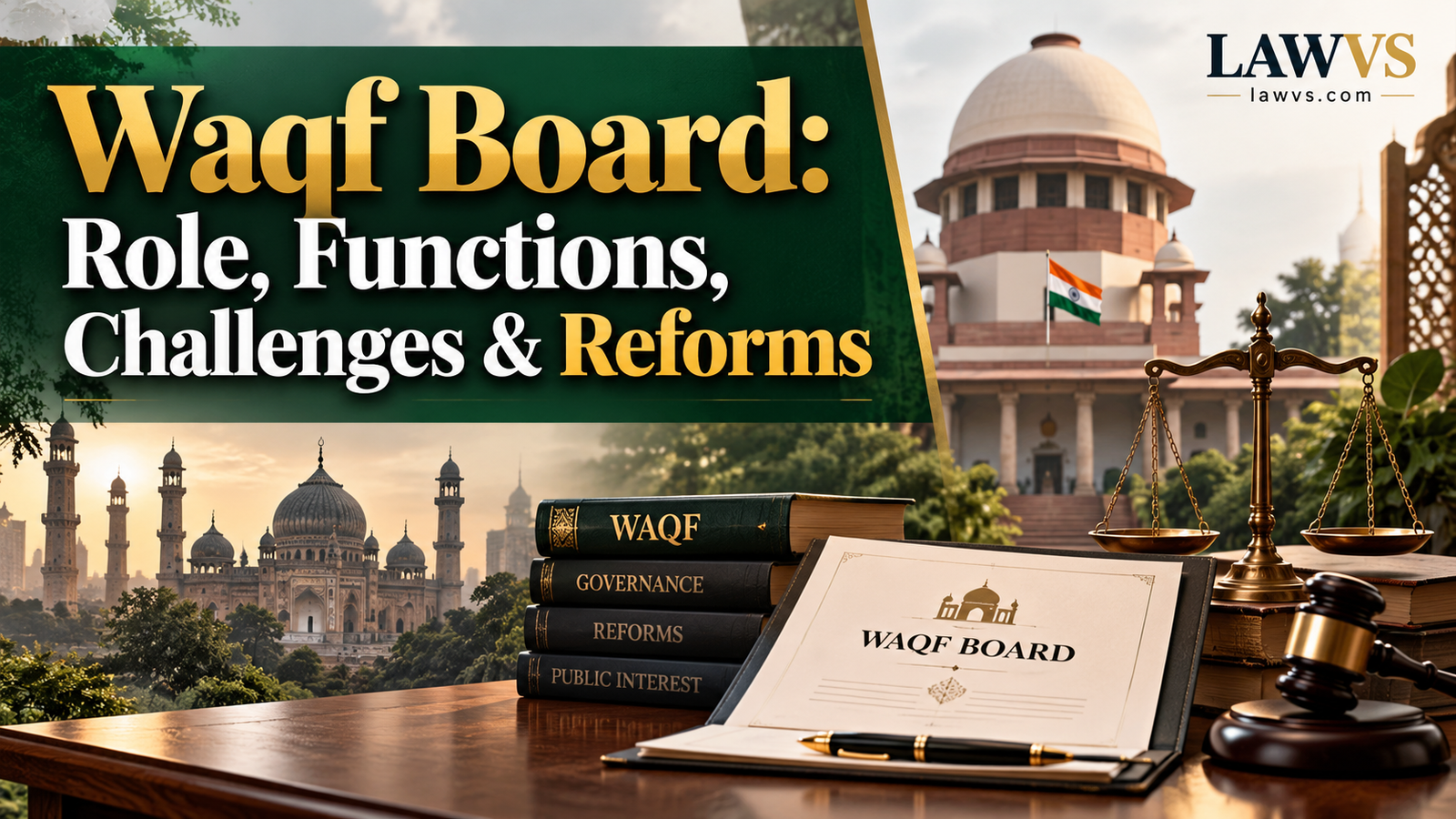
The Waqf Board is a statutory body entrusted with managing and overseeing waqf properties—assets dedicated to religious, charitable, or social causes in Islamic communities. A waqf is a permanent endowment of property or money for religious or public welfare purposes that cannot be sold, transferred, or inherited.
In India, Waqf Boards operate under the Waqf Act, 1995, serving as custodians to ensure the proper use and protection of waqf properties. These boards play a vital role in community welfare by managing assets for educational, healthcare, and charitable initiatives.
What is a Waqf?
A waqf is a voluntary dedication of property for religious, educational, or charitable purposes. Once dedicated, the property becomes inalienable, meaning it cannot be sold, gifted, or inherited. Examples include:
Mosques and religious buildings
Educational institutions
Hospitals and healthcare centers
Community welfare projects
Waqf assets generate income through rents, donations, and business activities, which are then utilized for the community’s benefit.
Structure and Composition of Waqf Boards in India
Each state in India has a State Waqf Board, which operates under the Central Waqf Council. The board consists of:
Chairperson: Leads the board and oversees operations.
Members: Includes religious scholars, legal experts, government officials, and waqf property managers.
Nominated Members: Selected by the government for expertise in Islamic law and community welfare.
This structure ensures a balance of religious knowledge, legal expertise, and administrative efficiency.
Key Functions of Waqf Boards
The primary responsibilities of Waqf Boards include:
1. Administration of Waqf Properties
Maintaining detailed property records
Leasing and renting properties
Ensuring assets are used as per waqf objectives
2. Protection of Waqf Assets
Preventing encroachment and illegal occupation
Safeguarding property ownership and rights
3. Financial Management
Collecting revenues, rents, and donations
Proper accounting and fund allocation for community use
4. Welfare Activities
Supporting education through schools, colleges, and scholarships
Funding hospitals, clinics, and healthcare programs
Promoting social welfare initiatives
5. Legal Actions
Handling property disputes and litigation
Taking action against misuse or mismanagement
Challenges Faced by Waqf Boards
Despite their significant role, Waqf Boards face multiple challenges:
Encroachments and Illegal Occupation: Many properties are illegally occupied, reducing benefits for the community.
Corruption and Mismanagement: Poor record-keeping and lack of transparency affect effective management.
Legal Disputes: Long-standing court cases delay proper utilization of assets.
Lack of Funding and Infrastructure: Insufficient resources prevent proper development and maintenance.
These challenges hinder the potential of waqf properties in contributing to social welfare.
Government Reforms and Measures
The Indian government has introduced several initiatives to strengthen Waqf Boards:
1. Digitalization of Records
Digitizing waqf property records ensures transparency and prevents mismanagement.
2. Amendments to the Waqf Act
Strengthening laws to prevent encroachment and misuse of assets.
3. Development Programs
Promoting the use of waqf properties for educational institutions, hospitals, and public welfare projects.
Encouraging better fund management and income generation from waqf assets.
These reforms aim to improve governance, accountability, and public trust in waqf management.
Importance of Strengthening Waqf Boards
A strong and well-managed Waqf Board can:
Ensure waqf assets benefit the community as intended
Support education, healthcare, and social welfare projects
Reduce corruption and prevent illegal occupation
Promote transparency and legal compliance
By empowering Waqf Boards, India can unlock the true potential of waqf properties, helping millions of people across the country.
Conclusion
The Waqf Board plays a crucial role in managing and protecting waqf properties for religious, charitable, and social purposes. While challenges like mismanagement, encroachments, and financial limitations exist, government reforms and better governance can address these issues. Strengthened Waqf Boards will not only preserve these sacred assets but also ensure they serve the community’s welfare efficiently.