Introduction
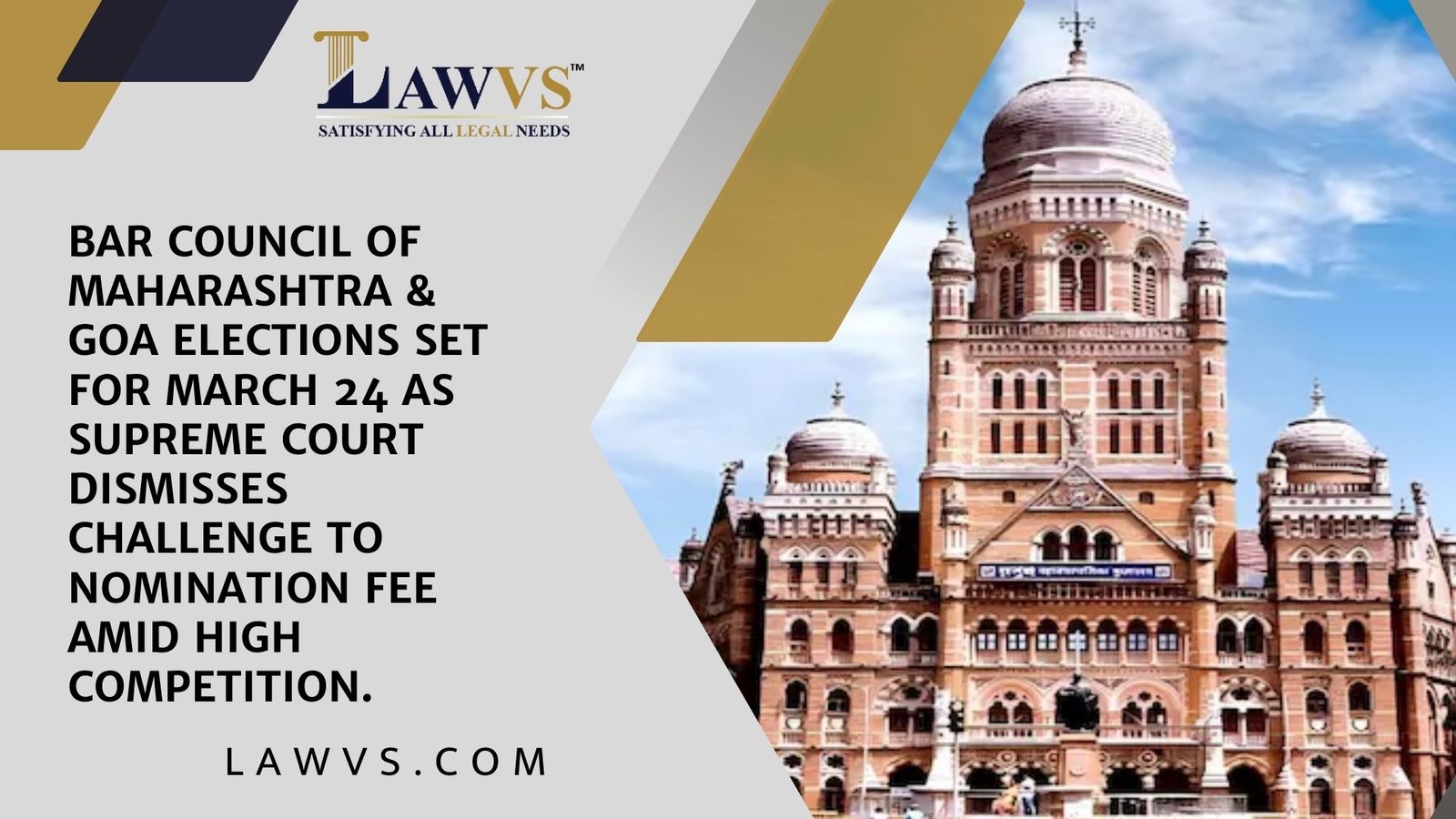
The Bar Council of Maharashtra and Goa is heading into a crucial election on March 24, 2026, with an unusually large number of candidates and heightened interest across the legal community. With more than 160 lawyers contesting, the election is being seen as a turning point in how leadership within the bar is shaped.
Role of the Bar Council
Established under the Advocates Act, 1961, the Bar Council of Maharashtra and Goa is responsible for regulating the legal profession across Maharashtra, Goa, and the Union Territories of Dadra & Nagar Haveli and Daman & Diu. Its responsibilities go beyond enrolment. The body also oversees disciplinary proceedings, ensures adherence to professional standards, and runs welfare and legal education initiatives. With a membership base of over two lakh advocates, its decisions have a direct impact on the functioning of the legal system at multiple levels.
Election Framework
The Council consists of 23 elected members, with seats reserved to ensure representation of women. In addition, two more women members are nominated after the election, reflecting a broader push toward inclusivity supported by the Bar Council of India. The election process follows a traditional ballot system, where advocates cast their votes in secrecy and candidates with the highest vote count secure positions on the Council.
Why This Election Stands Out
This election comes after a delay of nearly two years. The previous Council’s term ended in 2023, but logistical and administrative hurdles pushed the process forward to 2026. As a result, there is renewed energy and urgency among voters and candidates alike. Another striking feature is the scale of participation. The contest has drawn a wide spectrum of candidates—from seasoned practitioners to relatively young lawyers stepping into electoral politics for the first time. The presence of more than 50 women candidates also signals gradual progress in representation.
Debate Over Nomination Fee
One of the most debated aspects of the election has been the ₹1.25 lakh nomination fee required to contest. Several advocates approached the courts, arguing that the amount was excessive and could discourage participation, particularly from younger members of the bar. The matter ultimately reached the Supreme Court of India. The Court, however, chose not to interfere. It observed that contesting such elections is a statutory right and not a fundamental one, and that candidates can reasonably be expected to bear election-related costs. The fee, according to the Court, serves a functional purpose in managing the electoral process.
Campaign Trends on the Ground
With the voting date approaching, campaigning has picked up pace across bar associations in Maharashtra and Goa. Candidates are increasingly engaging in direct outreach, focusing on issues such as welfare schemes, transparency, and professional opportunities. There is also a noticeable shift in campaign style, with more emphasis on personal interaction and grassroots mobilization rather than traditional networking alone.
Changing Face of Leadership
Perhaps the most interesting aspect of this election is the emergence of younger candidates. A significant number of contestants have less than a decade of experience, suggesting a desire within the legal community for fresh perspectives. If these candidates succeed, the Council could see a shift in priorities, including greater focus on modernization, digital processes, and accountability.
Broader Implications
The significance of the election goes beyond internal governance. Bar Councils play a key role in maintaining the independence of the legal profession and ensuring access to justice. The composition of the Council can influence policy decisions on legal aid, disciplinary standards, and professional conduct.
Conclusion
The 2026 elections to the Bar Council of Maharashtra and Goa are shaping up to be more than a routine exercise. With a large and diverse pool of candidates, judicial scrutiny over election rules, and growing participation from younger lawyers, the contest reflects a profession in transition. The outcome will not only determine who governs the Council but may also indicate the direction in which the legal community is heading in the years to come.