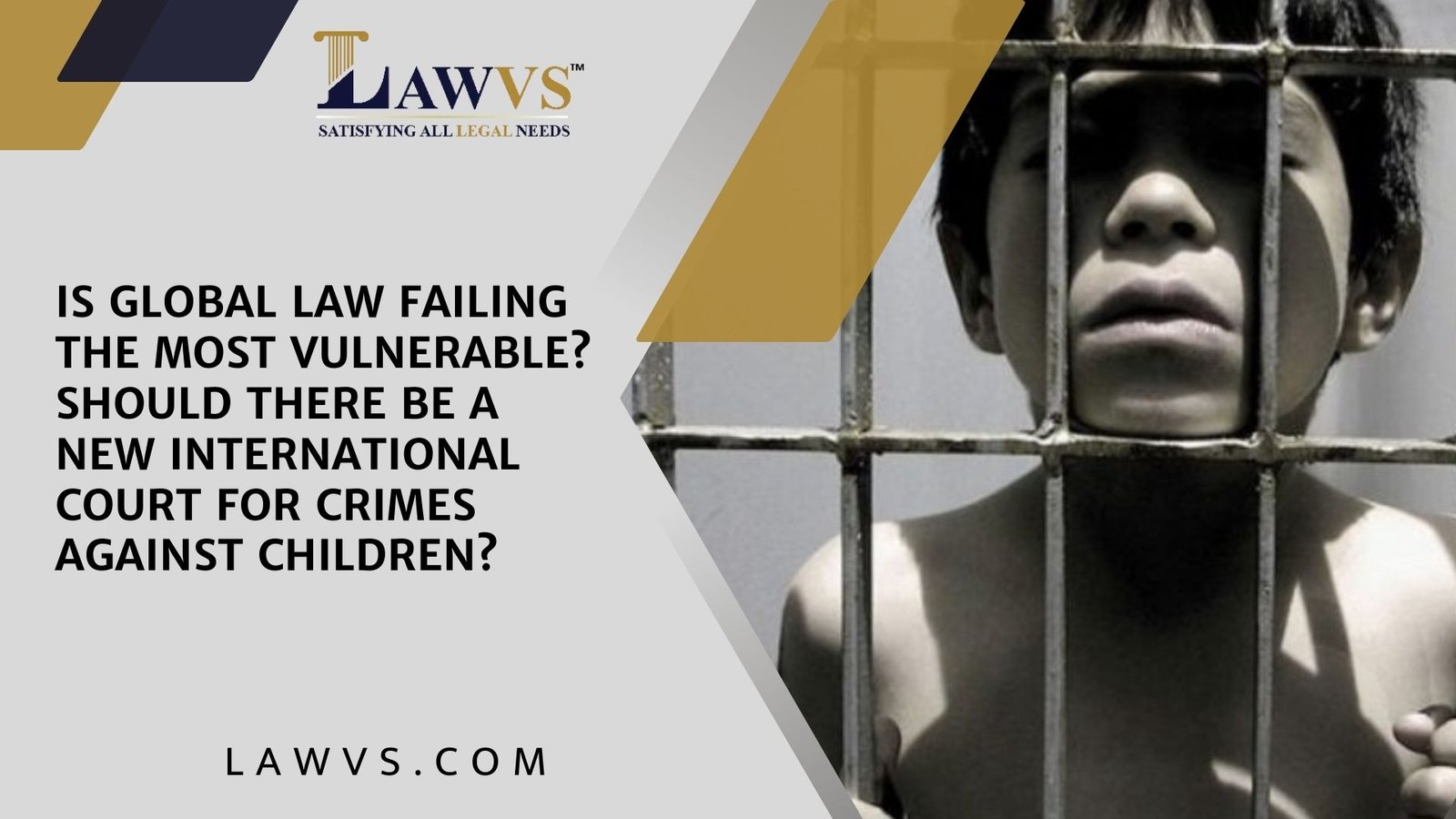
Is Global Law Failing the Most Vulnerable? Should There Be a New International Court for Crimes Against Children?
A serious global debate has emerged on whether existing international legal systems are truly capable of protecting children in conflict zones. This discussion gained momentum after former UK Prime Minister Gordon Brown proposed the creation of a special international court dedicated exclusively to crimes against children. His proposal comes at a time when violations against children—such as attacks on schools, recruitment of child soldiers, and widespread exploitation—are increasing across the world. Although international law already recognises such acts as grave crimes, there is growing concern that justice is often delayed or denied, raising an important question: is the current system failing those who need protection the most?
Why Is There a Need for a Separate International Court for Children?
The need for a dedicated court arises from the harsh reality that children continue to suffer disproportionately in armed conflicts. In many war-torn regions, they are not just victims but are increasingly being targeted through systematic violence, forced recruitment, and denial of basic rights. While these crimes fall under war crimes and crimes against humanity, they are currently handled by broader institutions like the International Criminal Court. However, such bodies deal with a wide range of international offences, often leading to delays and limited focus on child-specific crimes. A specialised court, therefore, is being seen as a way to ensure faster trials, focused attention, and a justice system that is sensitive to the unique vulnerabilities of children.
Are Existing International Laws Not Enough to Protect Children?
On paper, the legal framework for protecting children is quite strong. Instruments developed under the United Nations, including conventions and international treaties, clearly prohibit violence against children. However, the real problem lies in implementation. Many countries either lack the political will to prosecute offenders, are not bound by certain international agreements, or fail to cooperate with global courts. This results in a major enforcement gap where perpetrators often escape punishment. So, while laws exist, their effectiveness remains limited, which raises serious doubts about whether the current framework is truly sufficient.
What Legal Challenges Does This Proposal Raise?
The idea of establishing a new international court is not without complications. One of the biggest questions is whether a separate court is necessary when institutions like the ICC already exist. There are also concerns about jurisdiction—how such a court would exercise authority over sovereign nations and ensure compliance with its decisions. Additionally, issues like funding, political acceptance, and enforcement mechanisms could determine whether such a court can function effectively. Despite these challenges, the proposal strongly argues that crimes against children deserve special recognition and priority, rather than being treated as secondary within broader international crimes.
Is the World Witnessing a Rise in Crimes Against Children?
Recent global trends suggest a worrying shift in the nature of modern conflicts. Reports from organizations like the United Nations indicate that children are increasingly becoming direct targets of violence. There has been a noticeable rise in attacks on schools and hospitals, recruitment of minors into armed groups, and large-scale displacement affecting millions of children. In some regions, children are even being used as human shields or forced into combat roles. At the same time, ongoing humanitarian crises have deprived them of access to food, healthcare, and education. These developments highlight a grim reality—children are no longer just collateral victims but are being systematically affected by conflict, making stronger legal protection an urgent necessity.
Conclusion: Can a New Court Bridge the Justice Gap?
The proposal by Gordon Brown marks an important moment in the evolution of international criminal law. It forces the global community to rethink whether existing institutions like the International Criminal Court are enough to deal with the scale and seriousness of crimes against children. A dedicated international court could potentially ensure faster justice, stronger accountability, and a more focused approach to protecting children. However, its success would depend on global cooperation and political will. Ultimately, the larger question remains—will the international community take concrete steps to protect its most vulnerable, or will these crimes continue to go unpunished?