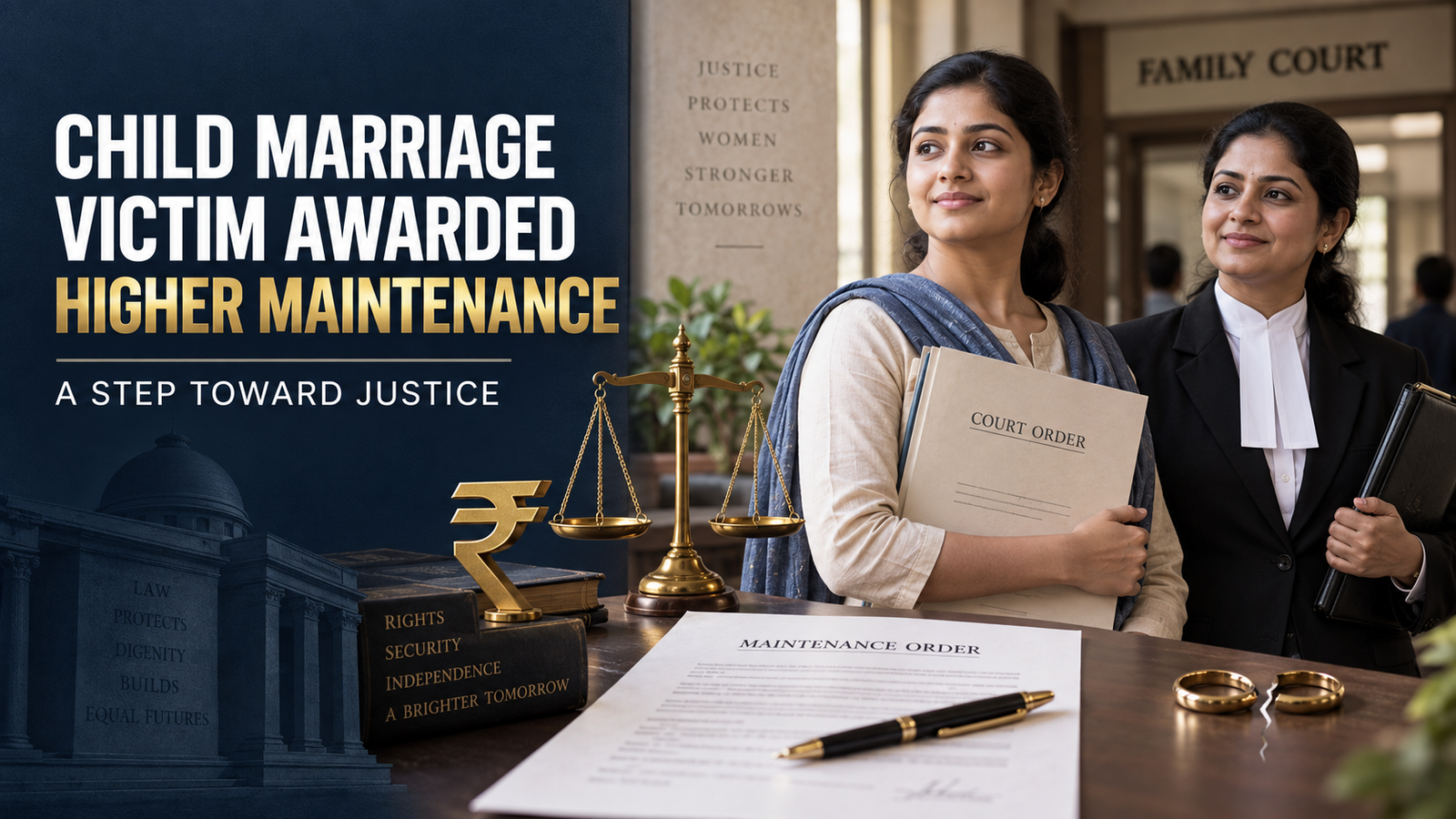
Child marriage has been one of the oldest social problems in many parts of the world, including India. Even though the law clearly prohibits the marriage of minors, thousands of young girls are still forced into marriage every year because of poverty, social pressure, and outdated traditions. Such marriages often rob children of their education, freedom, and childhood. They also expose them to physical, emotional, and financial hardships.
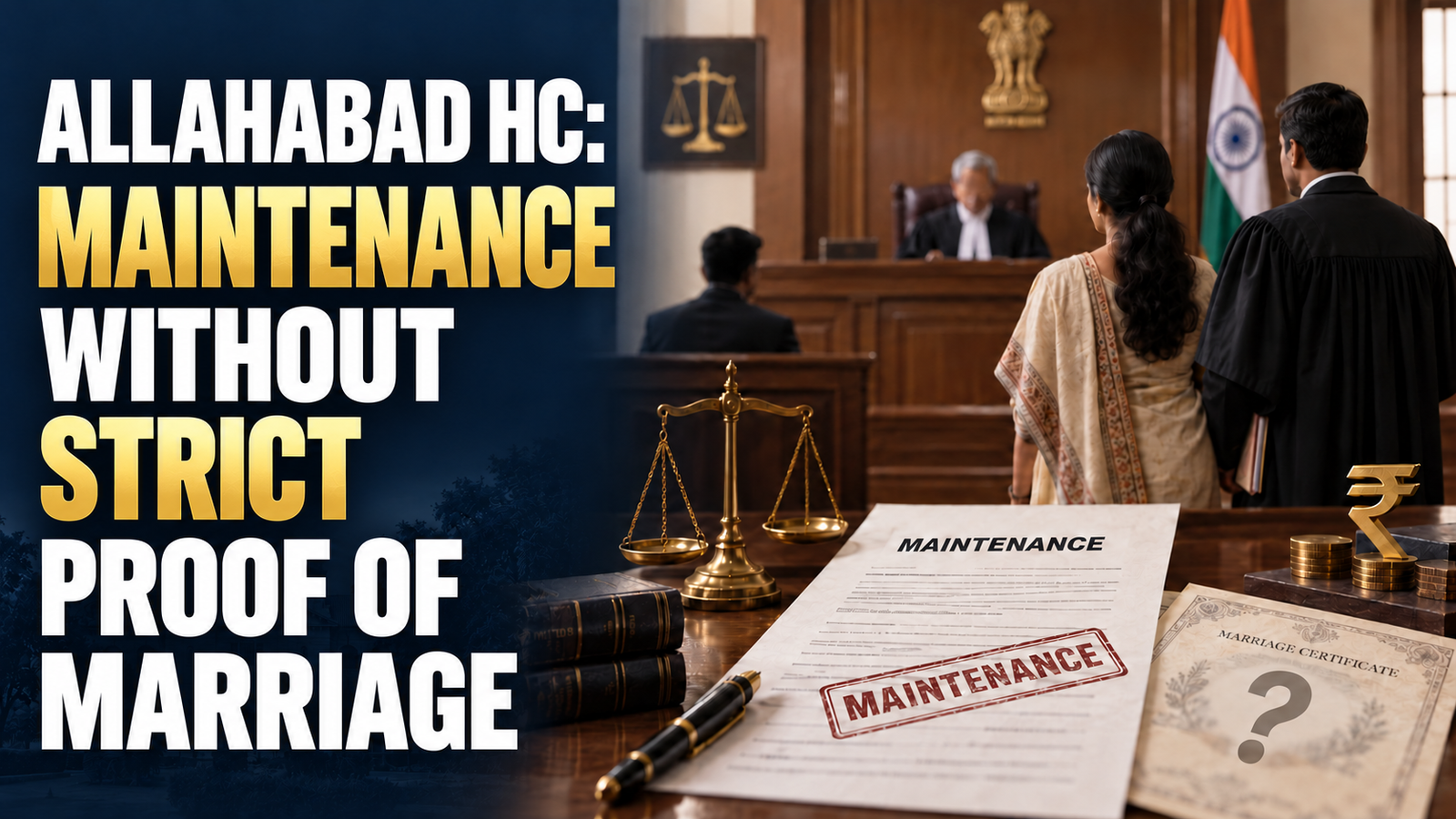
In recent years, the Indian judiciary has taken several important steps to protect the rights of child marriage victims. One such significant move is the decision to grant higher maintenance to victims of child marriage. This approach recognizes that these individuals, especially young women, should not be left without support simply because the marriage itself was illegal or forced upon them. It reflects a more compassionate and practical understanding of justice.
Understanding Child Marriage
Child marriage refers to the marriage of a person before
they reach the legal age of marriage. In India, the legal age for marriage is
18 years for women and 21 years for men. The Prohibition of Child
Marriage Act, 2006 was introduced to prevent such marriages and to
protect the rights of children. Under this law, a child marriage is not
encouraged or recognized as a valid social practice, and those involved in
arranging or promoting it can face legal punishment.
Despite these laws, child marriages continue to happen, especially in rural and economically weaker areas. Families often believe that marrying off their daughters early will reduce financial burdens or protect family honour. However, the reality is very different. Young girls who are married early are more likely to drop out of school, suffer from poor health, face domestic violence, and become financially dependent on their husbands.
The Meaning of Maintenance
Maintenance is a financial support that one person provides
to another, usually after separation or divorce, to help them meet their basic
needs. In family law, maintenance is meant to ensure that a spouse who has no
independent source of income can live with dignity. It covers expenses such as
food, clothing, shelter, medical care, and education.
For victims of child marriage, maintenance becomes even more important. Many of them are married at a young age and are denied opportunities to study or develop skills. As a result, they are often unable to earn a livelihood and become completely dependent on their husbands or in-laws. If the marriage breaks down or is declared invalid, they may have nowhere to go and no financial security.
Why Higher Maintenance Matters
The decision to grant higher maintenance to a child marriage
victim is not just about money. It is about acknowledging the suffering and
disadvantages that such victims face. A girl who was forced into marriage as a
child has already lost valuable years of education and personal growth. She may
have been subjected to abuse, early pregnancy, or neglect. Simply declaring the
marriage invalid does not erase the damage that has already been done.
Higher maintenance helps provide financial stability and
gives the victim a chance to rebuild her life. It can support her education,
vocational training, healthcare, and daily needs. More importantly, it sends a
strong message that society and the legal system stand with the victim rather
than punishing her for a crime committed against her.
Courts have increasingly recognized that child marriage victims should not suffer because of the illegal actions of adults around them. The burden of the wrong should fall on those responsible for arranging or benefiting from the marriage, not on the child who had no real choice.
A Progressive Approach by the Judiciary
The Indian judiciary has often played a key role in protecting vulnerable sections of society. In cases involving child marriage, courts have interpreted the law in a way that prioritizes the welfare of the victim. They have observed that the purpose of maintenance is to prevent destitution and ensure a dignified life. Therefore, even if a marriage is legally questionable because it took place when one party was a minor, the victim should not be denied financial assistance.
Granting higher maintenance also reflects the constitutional values of equality, dignity, and social justice. The Constitution of India guarantees the right to live with dignity, and financial support is often necessary for victims to enjoy that right. By increasing maintenance, courts recognize that the impact of child marriage goes far beyond the wedding ceremony itself—it affects every aspect of a person's future.
The Social Impact of Such Decisions
At the same time, these decisions encourage victims to come
forward and seek justice. Many young women remain silent because they fear
social stigma or financial insecurity. Knowing that the law can provide support
and protection gives them the confidence to stand up for their rights.
Moreover, higher maintenance can help break the cycle of poverty. A victim who receives adequate financial support can continue her education or learn a skill, making it possible for her to become independent in the future. This not only benefits the individual but also contributes to the development of society as a whole.
Challenges That Still Remain
While such legal developments are encouraging, many
challenges remain. Child marriage continues to exist because of deep-rooted
social customs and lack of awareness. In many cases, victims do not know their
legal rights or are unable to approach the courts due to family pressure or
limited access to legal aid.
Another issue is the delay in legal proceedings. Maintenance
cases can take months or even years to be resolved, leaving victims without
immediate support. There is also a need for better implementation of laws and
stronger efforts by local authorities to prevent child marriages before they
happen.
Apart from legal action, education and community awareness are equally important. Families need to understand that educating a girl child and allowing her to make her own life choices is far more beneficial than marrying her off at a young age. Government agencies, schools, non-governmental organizations, and community leaders must work together to eliminate this harmful practice.
Conclusion
The decision to grant higher maintenance to child marriage victims is a welcome and progressive step towards justice. It recognizes that these victims are not responsible for the circumstances forced upon them and deserve support to rebuild their lives. Financial assistance cannot undo the pain and opportunities lost because of child marriage, but it can provide a path towards independence, dignity, and hope.
The fight against child marriage is not only about enforcing
laws; it is also about changing mindsets and creating a society where every
child can enjoy a safe and happy childhood. By ensuring that victims receive
adequate maintenance and legal protection, the justice system reinforces the
idea that the rights and welfare of children must always come first.
A nation truly progresses when it protects its most
vulnerable citizens. Supporting child marriage victims through higher
maintenance is not an act of charity—it is an act of justice, fairness, and
humanity.