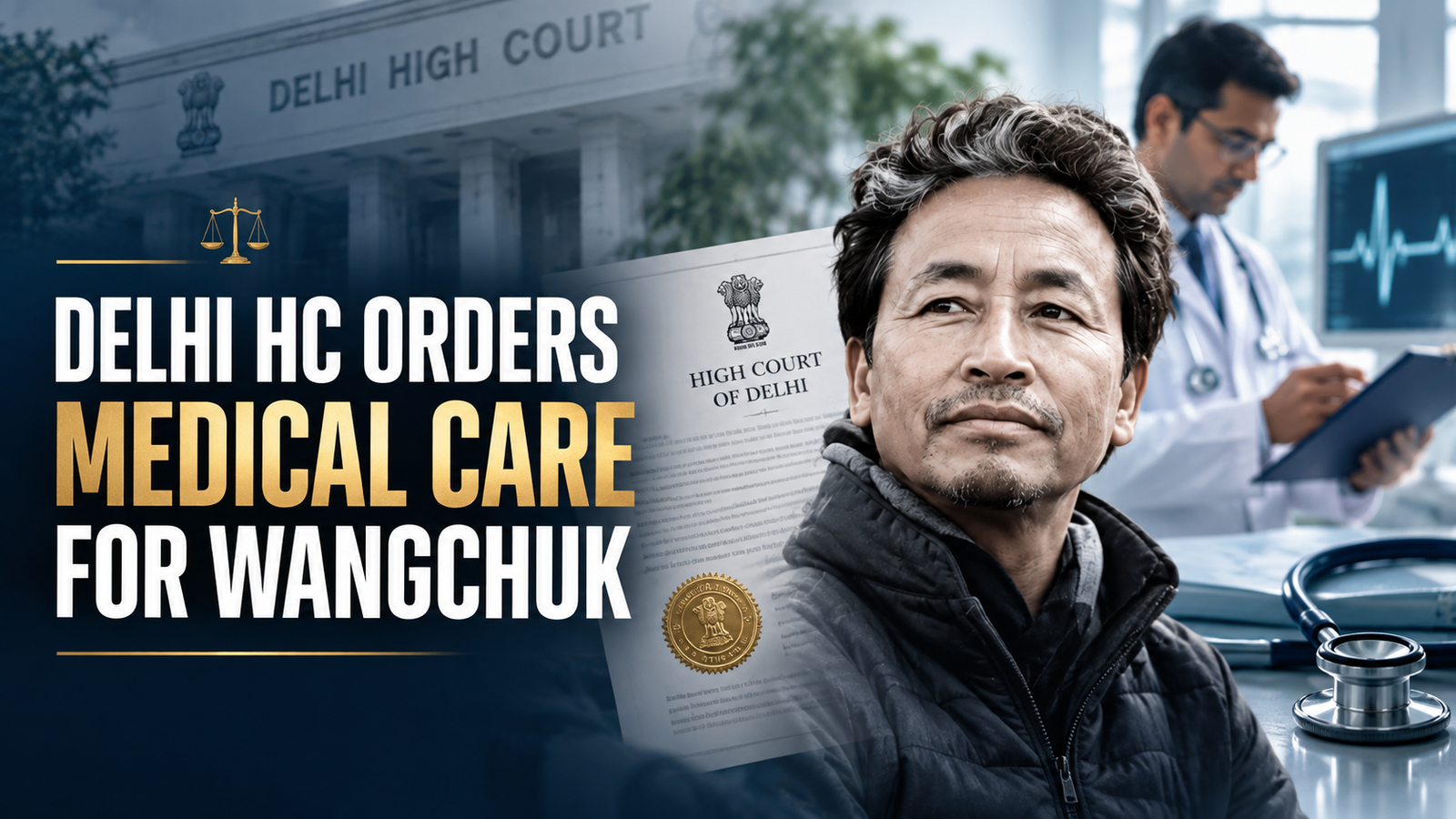
The Delhi High Court has issued important directions to ensure the health and safety of education reformer and environmental activist Sonam Wangchuk, who is currently on a prolonged hunger strike at Jantar Mantar, New Delhi. Hearing a Public Interest Litigation (PIL) concerning Wangchuk's deteriorating health, the Court directed the Central Government and the Delhi Government to provide continuous medical supervision while respecting his ongoing protest. The order highlights the constitutional balance between an individual's right to peaceful protest and the State's duty to protect life under Article 21 of the Constitution of India. Sonam Wangchuk has been observing a hunger strike to press for his demands. As the protest continued, concerns regarding his health intensified. According to submissions before the Court, Wangchuk had reportedly experienced significant weight loss, raising fears about possible medical complications arising from prolonged fasting. In view of these concerns, a Public Interest Litigation (PIL) was filed before the Delhi High Court seeking immediate medical intervention and necessary directions to safeguard his life. Recognizing the importance of protecting human life, the Delhi High Court directed the concerned authorities to ensure continuous medical care for Sonam Wangchuk throughout his hunger strike. The Court ordered: Daily medical examinations by qualified doctors. Regular monitoring of vital health parameters, including blood pressure, pulse rate, oxygen saturation, and overall physical condition. Immediate medical treatment if doctors observe any serious deterioration in his health. Coordination between the Central Government and the Delhi Government to ensure proper medical supervision. The Court observed that protecting human life remains a fundamental responsibility of the State. One of the prayers in the PIL requested the Court to direct the authorities to administer force-feeding if necessary to save Wangchuk's life. However, the Delhi High Court did not issue an immediate direction for force-feeding. Instead, the Court held that any such medical intervention should be guided by the professional opinion of qualified medical experts and the patient's medical condition. Rather than issuing a blanket order, the Court left the decision to the treating doctors based on accepted medical standards and ethical considerations. The Delhi High Court's order is important because it seeks to balance two constitutional values: Every citizen has the democratic right to express dissent and participate in peaceful protests, subject to reasonable restrictions under law. The Constitution of India guarantees every person the right to life and personal liberty under Article 21. Even when an individual voluntarily undertakes a hunger strike, the State continues to bear the responsibility of taking reasonable steps to protect life and provide necessary medical care. The Court's approach reflects an attempt to preserve both constitutional principles without unnecessarily interfering with the ongoing protest. The matter has received significant public attention across India. Several citizens, activists, social organisations, and public figures have expressed concern regarding Sonam Wangchuk's health and have urged the authorities to engage in meaningful dialogue to resolve the underlying issues peacefully. The case has also sparked discussions on the relationship between democratic protests, public health, and constitutional rights. The Delhi High Court has currently focused on ensuring Sonam Wangchuk receives continuous medical monitoring during his hunger strike. Future hearings may consider further developments depending on: His medical condition. Reports submitted by doctors. Responses filed by the Government. Any additional relief sought by the parties. The legal proceedings remain ongoing. The Court intervened after a Public Interest Litigation raised concerns about Sonam Wangchuk's deteriorating health during his prolonged hunger strike and sought urgent medical supervision. The Court directed daily medical examinations, continuous monitoring of vital health parameters, and immediate medical attention if doctors notice any serious decline in his condition. No. The Court did not direct force-feeding. It stated that any medical intervention should be based on the professional judgment of qualified doctors and the patient's medical condition. The order balances two constitutional principles—the right to peaceful protest and the State's duty to protect every person's life under Article 21 of the Constitution. Yes. The matter remains pending before the Delhi High Court, and further hearings may take place depending on medical reports and future developments. The Delhi High Court's directions regarding Sonam Wangchuk's hunger strike underline the judiciary's commitment to protecting the right to life while respecting the right to peaceful protest. By ordering daily medical monitoring instead of immediately directing force-feeding, the Court adopted a balanced approach that places medical expertise at the center of decision-making. As the matter continues before the Court, future proceedings are likely to shape the legal approach toward prolonged hunger strikes, medical ethics, and the constitutional responsibilities of the State.Why Was the PIL Filed?
What Did the Delhi High Court Order?
Did the Court Order Force-Feeding?
Why Is This Order Legally Significant?
1. Right to Peaceful Protest
2. Right to Life Under Article 21
Public Reaction
What Happens Next?
Why did the Delhi High Court intervene in Sonam Wangchuk's hunger strike?
What medical directions did the Delhi High Court issue?
Did the Delhi High Court order force-feeding?
Why is this order important?
Is the case still pending?
Delhi HC Orders Medical Care for Wangchuk