Tamil Nadu Court Awards Death Penalty to 9 Cops in Custodial Death Case
Introduction
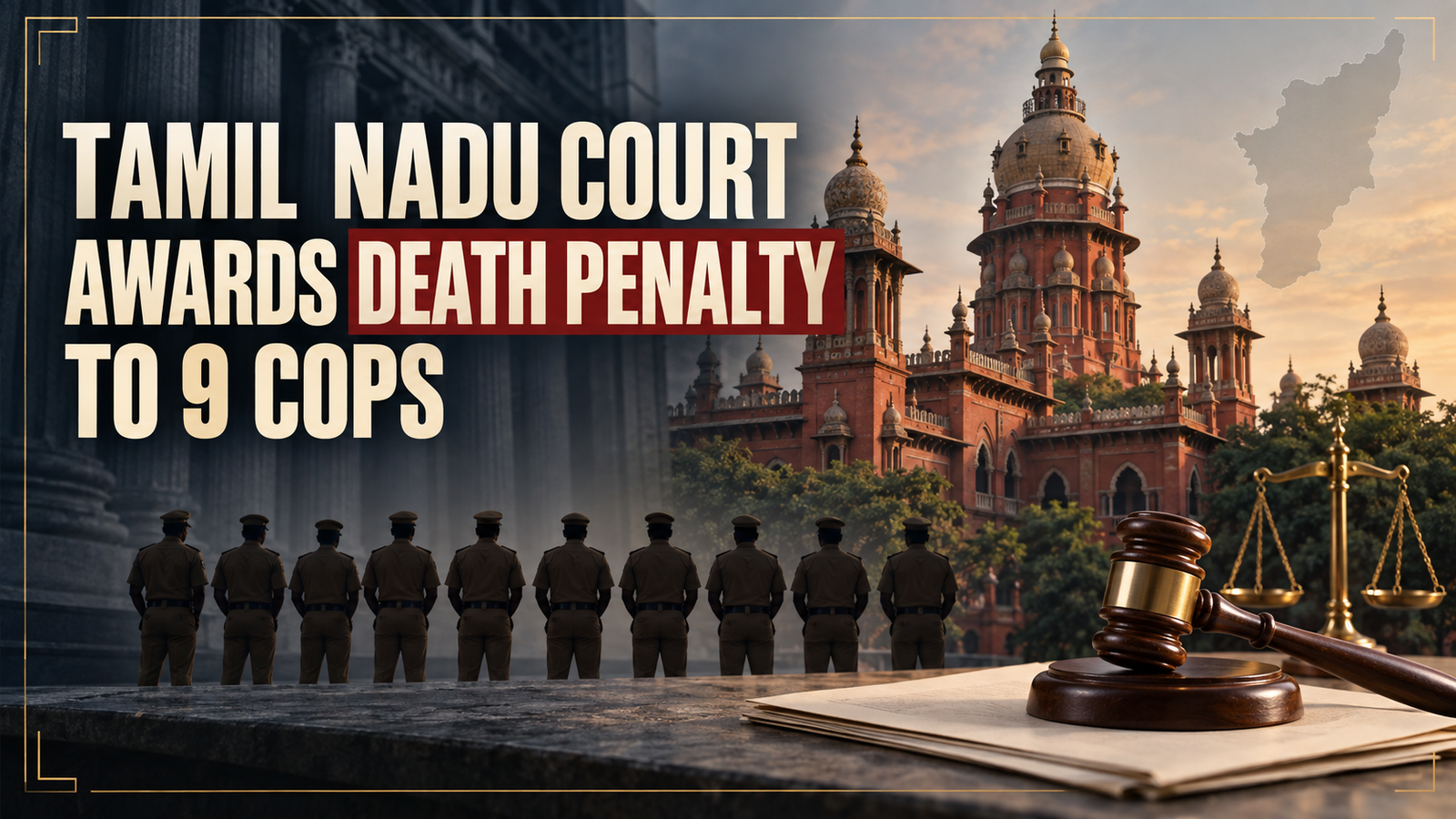
In a significant and rare verdict, a court in India has sentenced nine policemen to death for the custodial torture and killing of a father and son during the Covid-19 lockdown in 2020. The judgment is being seen as a major step toward accountability in cases of police brutality.
Background of the Incident
The case relates to the deaths of P. Jeyaraj and his son J. Bennix in Tamil Nadu’s Sathankulam in June 2020. The two were detained for allegedly keeping their mobile phone shop open beyond permitted hours during Covid lockdown restrictions. According to investigators, the victims were subjected to severe custodial torture inside the police station and died shortly after being released, sparking nationwide outrage and protests.
Court Verdict
The First Additional District and Sessions Court in Madurai found nine police officers guilty of murder and destruction of evidence. The court termed the case as falling under the “rarest of rare” category, warranting capital punishment. The verdict comes nearly six years after the incident, following an extensive probe by the Central Bureau of Investigation (CBI) and examination of multiple witnesses.
Nature of the Crime
The court observed that the custodial violence was deliberate and brutal. Reports indicate that the victims were assaulted overnight, and the extent of injuries pointed to extreme abuse of authority by the police personnel. The case shocked the nation at the time, drawing comparisons to global incidents of police brutality and prompting calls for systemic reforms.
Reactions and Impact
Families of the victims welcomed the judgment, calling it long-awaited justice. Human rights groups, while acknowledging the conviction, have expressed mixed views on the use of the death penalty, emphasizing the need for broader police reforms. The ruling is considered one of the rare instances where law enforcement officials in India have been awarded capital punishment for custodial deaths.
Conclusion
The judgment underscores the judiciary’s firm stance against custodial violence and abuse of power. As debates continue over police reforms and the use of the death penalty, the case stands as a landmark moment in India’s criminal justice system, reinforcing that no on is above the law.