Supreme Court: Election Petitions Must Stand on Existing Evidence, No Scope for Remand to Cure Deficiencies
Introduction
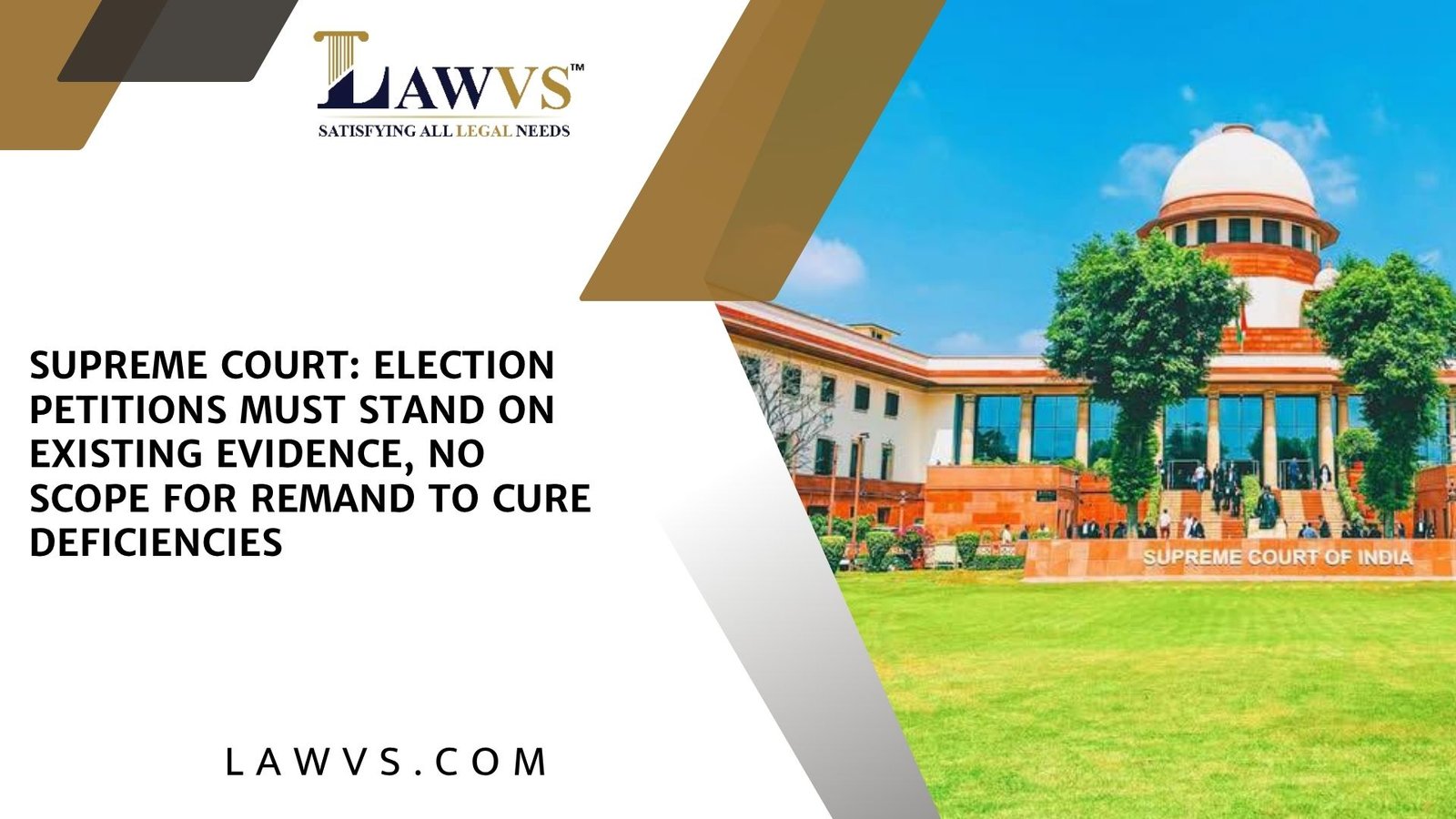
In a significant ruling, the Supreme Court of India has held that election petitions must be decided strictly on the basis of the material available on record and cannot be remanded to allow parties to fill evidentiary gaps. The judgment reinforces the need for procedural discipline in election-related litigation.
Background of the Case
Background of the Case
The case arose from an election dispute where the petitioner sought an opportunity to introduce additional evidence after certain deficiencies were noticed during the proceedings. The request was made to remand the matter so that the evidentiary gaps could be cured.
Key Legal Issue
The primary question before the Court was whether an election petition can be sent back (remanded) to allow parties to strengthen their case by bringing in new evidence at a later stage.
Court’s Observation and Rationale
The Supreme Court rejected such a course, observing that election petitions are special statutory proceedings that must adhere to strict timelines and procedures. It held that allowing parties to fill gaps in evidence would defeat the purpose of expeditious resolution of election disputes.
The Court emphasized that litigants must come prepared with a complete case and cannot seek a “second chance” to improve their evidence after the trial has progressed.
Impact of the Ruling
This decision is expected to:
•Ensure faster disposal of election petitions
•Discourage weak or speculative challenges
•Strengthen procedural discipline in election litigation
It also reinforces the principle that the burden of proof lies on the petitioner from the very beginning.
Conclusion
The ruling highlights the importance of finality and efficiency in election disputes. By disallowing remand to cure evidentiary gaps, the Supreme Court has made it clear that election petitions must be built on strong and complete evidence from the outset, thereby safeguarding the credibility of the electoral process.