Can Expanding the Supreme Court from 34 to 38 Judges Really Solve India’s Judicial Backlog?
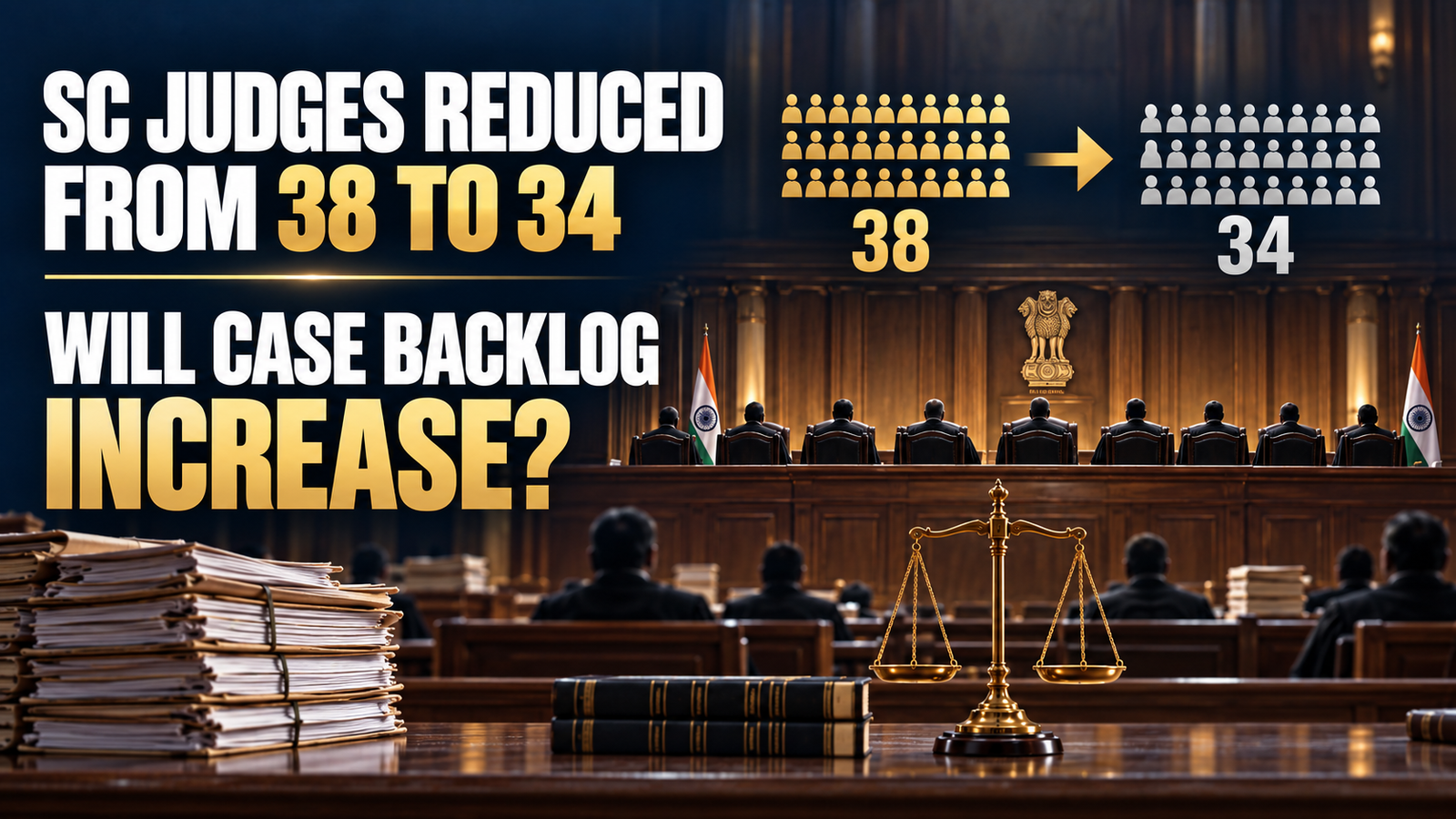
The Union Cabinet has approved a proposal to increase the sanctioned strength of the Supreme Court of India from 34 to 38 judges. The move is aimed at tackling rising case pendency and the increasing complexity of constitutional litigation. The amendment is expected to be introduced in Parliament through a change to the Supreme Court (Number of Judges) Act.
Why Is the Number Being Increased?
Over the past decade, the Supreme Court has faced a sharp rise in pending cases, including constitutional disputes, criminal appeals, civil and commercial matters, and public interest petitions. Thousands of cases remain unresolved, putting heavy pressure on the court. The government believes that increasing the number of judges could speed up hearings, reduce delays, and allow more benches to function at the same time. Legal experts also say the current strength is insufficient for India’s population and litigation load.
Current Strength of the Supreme Court
At present, the Supreme Court consists of the Chief Justice of India and 33 judges, making a total of 34. The proposed change would increase this to 38 judges, including the Chief Justice and 37 other judges, if approved by Parliament.
What Is Case Pendency?
Case pendency refers to cases that remain undecided for long periods. The Supreme Court handles appeals from across India, making it one of the busiest courts in the world. Delays are caused by rising appeals, judicial vacancies, limited infrastructure, procedural issues, and increasing public interest litigation. Experts warn that such delays affect public trust and economic as well as governance decisions.
Why Are Constitutional Cases Rising?
The Supreme Court is increasingly dealing with complex constitutional matters involving electoral laws, federal disputes, digital privacy, reservation policies, citizenship issues, and free speech. Many of these require Constitution Benches of five or more judges, adding to the workload. More judges could help form additional benches without slowing routine cases.
Has the Strength Been Increased Before?
Yes. The court started in 1950 with 8 judges (including the Chief Justice). It was expanded to 26 in 1986, 31 in 2009, and 34 in 2019. The proposed increase to 38 continues this gradual expansion trend.
Will More Judges Solve the Problem?
Not fully. Experts say judicial delays are also caused by vacancies in lower courts, lack of infrastructure, slow digital systems, procedural delays, and heavy government litigation. They argue that reforms in case management and faster appointments are equally important.
What Happens Next?
The government will introduce the amendment bill in Parliament. If passed by both Houses and approved by the President, the new strength will come into effect. After that, new appointments will be considered through the collegium system, and more benches may be formed. However, appointments will still require coordination between the judiciary and the executive.
Why Does It Matter?
Delays in the Supreme Court affect bail cases, appeals, property disputes, constitutional rights, and business matters. A faster court could improve public trust in the justice system. At the same time, the proposal highlights that India’s judicial backlog is now a major governance issue that needs deeper structural reforms, not just incremental changes.