xAI Files Lawsuit Against Colorado Over Controversial AI Regulation
Introduction
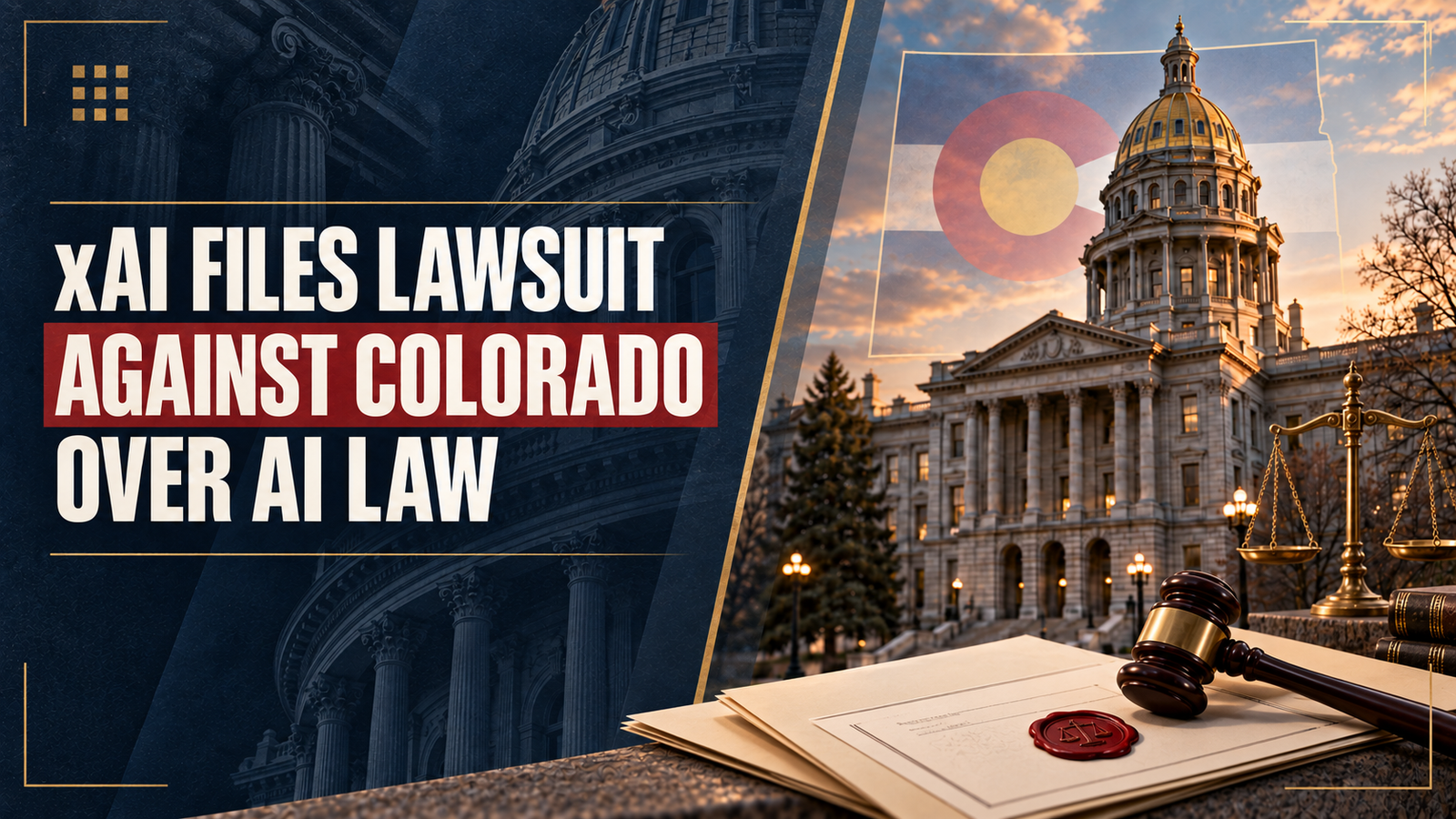
Elon Musk’s artificial intelligence company xAI has initiated legal action against the U.S. state of Colorado, challenging a newly enacted law aimed at regulating AI systems. The lawsuit marks a significant escalation in the growing clash between tech companies and governments over AI oversight.
Background of the Dispute
The contested legislation—designed to curb “algorithmic discrimination”—requires AI developers to implement safeguards ensuring their systems do not produce biased outcomes in areas such as employment, housing, education, and financial services.
Colorado became one of the first U.S. states to pass a comprehensive AI regulation framework, reflecting increasing concerns about the societal risks posed by automated decision-making systems.
xAI’s Legal Challenge
In its federal lawsuit, xAI argues that the law imposes excessive compliance burdens and interferes with the development of AI technologies. The company claims the legislation violates the First Amendment by effectively forcing developers to embed the state’s preferred viewpoints into AI systems.
The firm has also contended that the rules could restrict chatbot outputs—particularly affecting its AI system, Grok—by limiting how information is generated or presented.
Constitutional and Industry Implications
xAI is seeking a court injunction to block enforcement of the law and a declaration that the statute is unconstitutional.
The case raises broader constitutional questions about whether AI-generated content qualifies as protected speech and how far governments can go in regulating it. It also highlights tensions between innovation and accountability in rapidly evolving technologies.
Wider Context
This lawsuit is part of a broader trend of legal challenges by Musk-linked companies against state-level AI regulations in the United States. Debates are intensifying over whether a unified federal framework should replace a patchwork of state laws governing artificial intelligence.
Conclusion
The outcome of this case could have far-reaching consequences for the future of AI regulation in the U.S. If successful, xAI’s challenge may limit states’ ability to impose strict oversight on AI systems. Conversely, a ruling in favor of Colorado could strengthen regulatory efforts aimed at ensuring ethical and unbiased AI deployment.