Did the Supreme Court of India Call Police Action “Shameful” in Handling a Child Rape Case?
Introduction
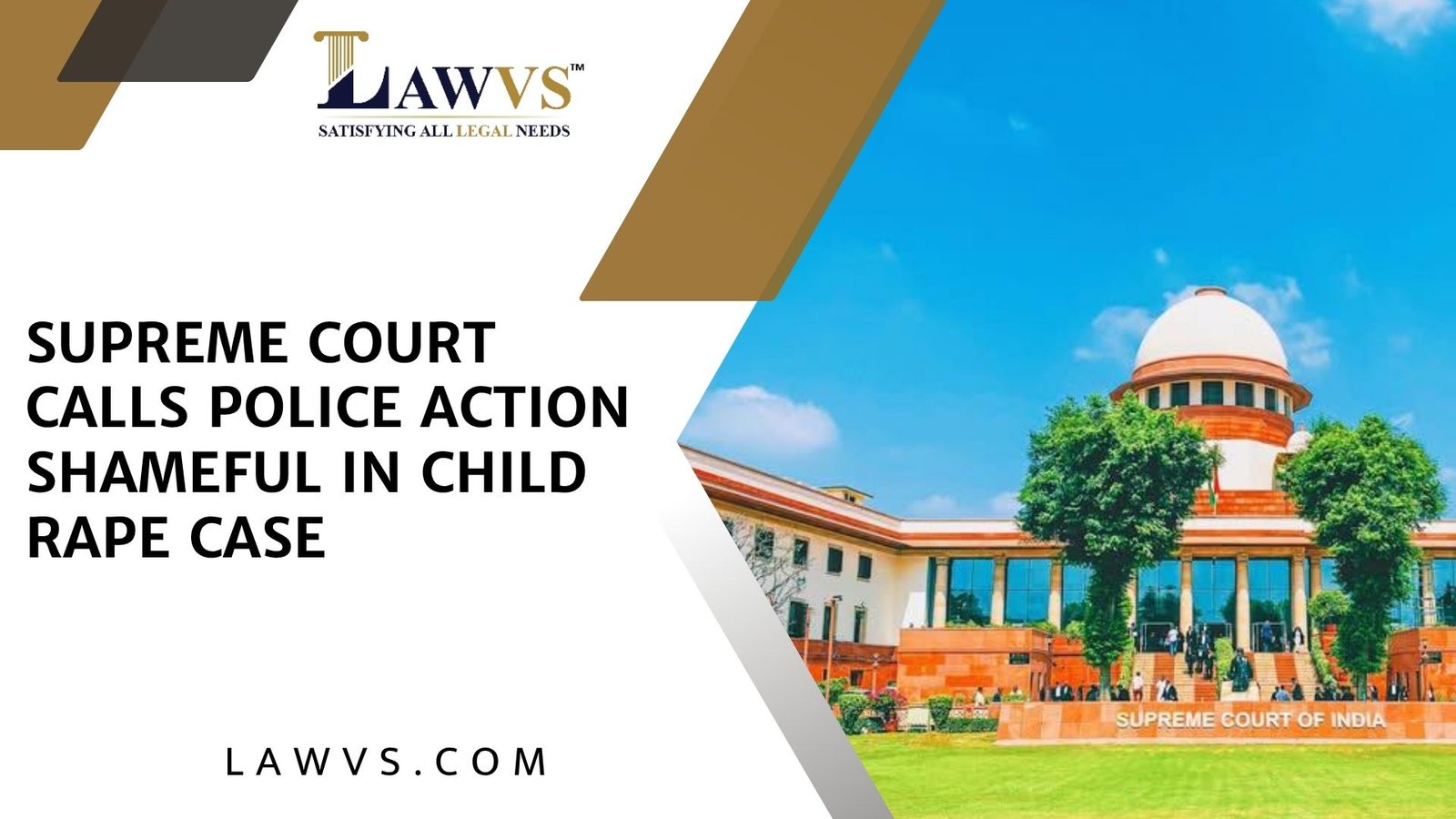
The handling of cases involving child victims requires not just legal precision but also deep sensitivity. In a recent development, the Supreme Court of India strongly criticized the conduct of the police in a child rape case, describing it as “shameful.” The Court’s observations came after it was revealed that a three-year-old victim had been summoned during the investigation. This incident has once again raised serious concerns about whether law enforcement authorities are adequately following child protection laws and procedures.
Background of the Case
The case involved a minor child who was a victim of sexual assault. During the course of the investigation, the police reportedly summoned the three-year-old child, an action that immediately drew criticism for being insensitive and inappropriate. The matter reached the Supreme Court of India, which took note of the situation and questioned the manner in which the investigation was conducted.
What Did the Supreme Court Observe?
While hearing the matter, the Supreme Court of India expressed strong displeasure and termed the police action as “shameful.” The Court observed that summoning a child of such tender age reflects a complete lack of understanding of the legal safeguards meant to protect minor victims. It emphasized that authorities must act with extreme care in such cases and ensure that their actions do not add to the trauma already suffered by the child.
Legal Framework: What Do the Laws Say?
The incident raises important questions regarding compliance with child protection laws in India. Under the Protection of Children from Sexual Offences Act, 2012, special procedures are laid down to ensure that children are not exposed to further trauma during investigation and trial. The law mandates that statements of child victims should be recorded in a child-friendly manner, preferably at their residence or a place where they feel safe, and not in intimidating environments like police stations.
Additionally, Section 164 of the Code of Criminal Procedure (CrPC) provides for the recording of statements before a Magistrate in a manner that ensures voluntariness and protection of the victim. Further, guidelines under Section 24 of the POCSO Act require that the police officer handling such cases must not detain the child at the police station and must ensure a supportive environment during questioning.
The Core Issue: Sensitivity in Investigation
The Court’s observations highlight a larger issue within the criminal justice system—the lack of sensitivity in handling cases involving children. Investigative processes must be adapted to the needs of vulnerable victims, especially minors, who may not fully understand the legal proceedings. Any action that appears routine for adults can have serious psychological consequences for a child.
Impact on the Justice System
Such incidents risk undermining trust in the justice delivery system. When legal safeguards are ignored, it not only affects the victim but also weakens the overall credibility of the investigation. The strong remarks by the Supreme Court of India serve as a reminder that strict adherence to statutory provisions is essential for ensuring justice in sensitive cases.
Conclusion
The recent criticism by the Supreme Court of India underscores the urgent need for a more humane and legally compliant approach in handling child sexual offence cases. Laws like the POCSO Act exist to protect the dignity and well-being of child victims, but their effectiveness depends on proper implementation. The Court’s intervention sends a clear message that justice is not just about punishment but also about protecting the vulnerable with care and sensitivity.