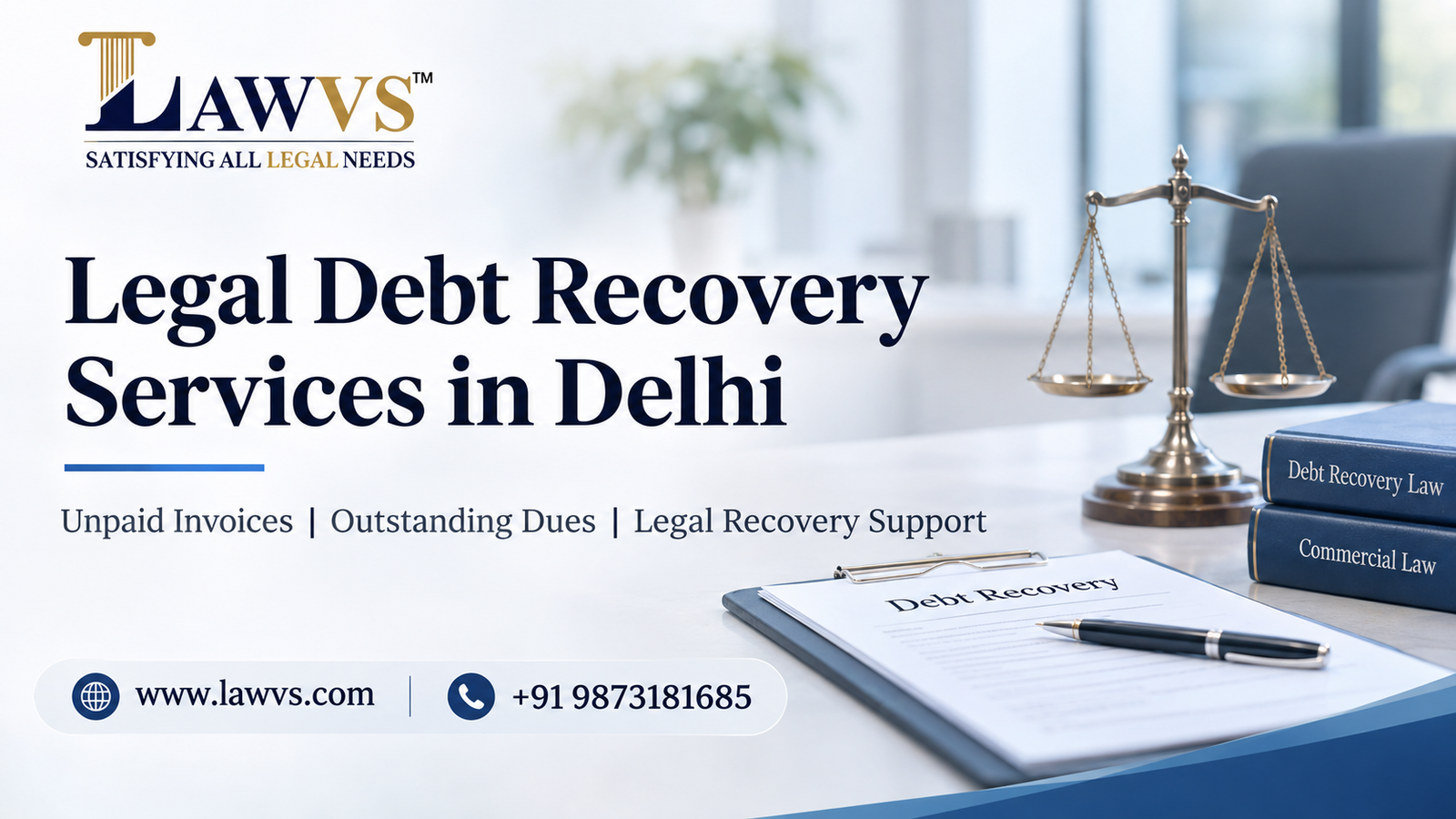
You delivered the goods, completed the work, or provided the agreed services. The customer accepted everything and promised to pay on time. But the payment never arrived. You sent reminders, made telephone calls, and shared your bank details again. The customer continued asking for more time. Now, the unpaid amount is affecting your business. You need money to pay employees, purchase stock, clear supplier bills, and manage daily expenses. This is where understanding your legal options becomes important. Legal Debt Recovery Services in Delhi help businesses and individuals pursue unpaid invoices, outstanding commercial payments, personal loans, and other legally enforceable debts through lawful recovery procedures. Depending on the circumstances, the available remedies may include a legal demand notice, negotiated settlement, mediation, arbitration, an MSME delayed-payment claim, a civil recovery suit, or cheque dishonour proceedings. The right process depends on the transaction, evidence, applicable law, and jurisdiction. Lawvs Law firm provides legal assistance concerning debt recovery disputes in Delhi, including unpaid business invoices, contractual payment disputes, legal notices, and appropriate court proceedings. The aim is to identify the legally recoverable amount, examine the available documents, and pursue a suitable remedy without unlawful pressure or harassment. Legal debt recovery means using lawful procedures to claim money that another person or business is legally required to pay. The outstanding amount may arise from a business transaction, service agreement, loan arrangement, or another enforceable financial obligation. For example, a manufacturer in Delhi supplies products worth ₹18 lakh to a distributor. The distributor accepts the goods but fails to clear the invoices within the agreed period. The manufacturer may be entitled to take legal action depending on the contract, evidence, limitation period, and applicable laws. Legal debt recovery assistance may include: Examining invoices and contracts. Checking outstanding account balances. Identifying the correct debtor. Preparing legal demand notices. Reviewing payment acknowledgments. Advising on lawful settlement arrangements. Preparing repayment agreements. Assessing MSME delayed-payment remedies. Filing appropriate civil or commercial suits. Initiating cheque bounce complaints where maintainable. Handling arbitration-related payment disputes. Seeking enforcement of judgments and awards. A debt recovery service should not be confused with a guarantee that every outstanding amount will be collected. Legal debt recovery begins with understanding the transaction. Before filing a case, the creditor should establish why the money is payable and how much remains outstanding. The first step is to identify whether the debt arises from goods supplied, services performed, a loan, or another legal obligation. For example, a supplier may have several invoices under one purchase order. The amount claimed should account for payments already received, returns, discounts, and valid credit notes. The creditor should gather invoices, purchase orders, delivery records, agreements, bank statements, and relevant communications. These records help establish the transaction and the amount due. The debtor may be an individual, proprietorship, partnership, LLP, or company. This distinction matters because the legally responsible party must be correctly identified. The limitation period and competent court or authority should be identified before proceedings begin. A creditor should not assume that a claim can be filed in Delhi merely because the creditor has an office in Delhi. A written demand or legal notice may be appropriate. It can set out the transaction, unpaid amount, and requested payment. Where suitable, the parties may attempt to resolve the dispute without contested litigation. If payment remains unpaid, a legally maintainable claim may be filed before the competent authority, tribunal, arbitrator, or court. If the creditor obtains a decree or award and the debtor still refuses to pay, enforcement proceedings may be necessary. Different types of debts may require different legal remedies. A business may raise invoices after supplying goods or completing services. If the buyer fails to pay, the supplier may consider contractual and statutory remedies. Manufacturers may experience delayed payments from wholesalers, dealers, and other buyers. For example, a manufacturer may have delivered components worth ₹25 lakh but received only ₹10 lakh. The remaining ₹15 lakh may form the basis of a recovery claim if legally enforceable. IT companies, consultants, marketing agencies, staffing businesses, and maintenance contractors may face unpaid service charges. The scope of work, proof of completion, and payment terms become important. Contractors may experience unpaid bills for construction, installation, fabrication, or maintenance work. Relevant evidence may include work orders, measurement records, completion certificates, and contractual terms. A person may lend money under a written or oral agreement. Bank transfers, messages, promissory notes, and acknowledgments may help establish the obligation. Businesses may have claims arising from supply agreements, distribution arrangements, lease-related obligations, or other commercial contracts. The dispute resolution clause may determine whether the matter belongs before a court or arbitrator. Ordinary payment follow-up may involve reminders, account statements, and voluntary requests for payment. Legal debt recovery involves examining enforceable rights and using procedures permitted by law. For example, an accounts executive may contact a customer about an unpaid invoice. If the customer continues refusing payment, legal advice may be needed to determine whether a formal notice, mediation, arbitration, or recovery suit is appropriate. Debt recovery does not permit intimidation, public humiliation, threats, or unlawful interference with the debtor's property. Even where money is genuinely owed, the creditor must follow lawful procedures. Yes. Some payment disputes can be resolved through negotiation, mediation, or a documented settlement. For example, a business may have an outstanding amount of ₹12 lakh. The debtor admits the liability but cannot pay the full amount immediately. The parties may agree to a written repayment schedule. The settlement may specify the admitted amount, due dates, payment method, interest where agreed and lawful, and consequences of default. However, creditors should distinguish an agreement to pay from actual payment received. A properly prepared agreement can reduce misunderstandings. Depending on the circumstances, it may identify: The creditor and debtor. The original transaction. The admitted outstanding amount. Payments already received. The final settlement amount. Instalment dates. Payment method. Treatment of applicable interest. Consequences of default. Treatment of pending proceedings. The conditions for full and final settlement. For example, if a debtor agrees to pay ₹8 lakh in four instalments, the agreement should clearly identify each due date and amount. Settlement terms must be reviewed for legal enforceability. A legal notice is a formal demand explaining the creditor's claim and requesting payment. For example, a wholesaler supplies electrical products worth ₹9 lakh. The buyer does not pay despite repeated reminders. A lawyer may prepare a notice describing the supply, invoices, payment obligation, outstanding balance, and demand. A well-drafted notice can clarify the dispute and create a formal record. It may also lead to settlement discussions. However, sending a notice does not guarantee payment, and it is not compulsory before every ordinary civil recovery suit. If the debtor does not respond, the creditor may consider further lawful action. The appropriate step depends on the agreement, evidence, claim amount, limitation period, and jurisdiction. For example, a qualifying commercial dispute may require pre-institution mediation before a suit is filed. Another dispute may be governed by an arbitration clause. The creditor should not assume that ignoring a notice automatically proves liability or results in a court decree. A supplier may have a claim against the company that purchased the goods or services. For example, a Delhi manufacturer supplies packaging materials worth ₹20 lakh to a private limited company. The buyer receives the materials but fails to pay. The supplier should verify the company name, agreement, purchase orders, delivery records, and payment history. Legal action may include a formal demand, settlement process, arbitration, or appropriate recovery proceedings. A company's directors do not automatically become personally responsible for every company debt. Separate personal liability must have a legal basis. Eligible micro and small enterprises may have special remedies under the Micro, Small and Medium Enterprises Development Act, 2006, as amended. The law regulates payment obligations for qualifying supplies of goods or services. Under Section 15, an agreed written payment period cannot exceed 45 days from the relevant date of acceptance or deemed acceptance. Where there is no written agreement on the payment period, the Act provides an appointed-day mechanism. For example, an eligible small manufacturer supplies machinery components to a company. The buyer accepts the products but does not pay within the applicable statutory period. The supplier may examine the delayed-payment remedies available under the MSMED Act. Eligibility depends on the supplier's qualifying status, registration history, transaction, and applicable legal provisions. Yes. Section 16 of the MSMED Act provides for statutory delayed-payment interest where its conditions apply. The provision specifies compound interest with monthly rests at three times the bank rate notified by the Reserve Bank of India. For example, an eligible supplier may claim the unpaid principal amount along with applicable statutory interest. The calculation depends on the due date, applicable bank rate, payment history, and relevant legal provisions. The amount should be calculated carefully rather than estimated without reference to the law. A qualifying supplier may examine the applicable statutory dispute resolution framework for delayed payments. The process may involve the competent authority or Micro and Small Enterprises Facilitation Council and the prescribed mediation or other dispute resolution procedure. The MSMED Act was amended in 2026, with different provisions taking effect on different notified dates. Therefore, the procedure applicable to a particular claim must be checked against the current law and relevant transaction dates. Not every enterprise holding an Udyam registration automatically qualifies for every statutory recovery remedy. A commercial recovery suit may be appropriate when the claim qualifies as a commercial dispute under the Commercial Courts Act, 2015, and meets the relevant jurisdictional requirements. For example, a supplier may seek recovery of a substantial unpaid amount arising from a business supply agreement. If the dispute qualifies under the Act and meets the specified-value requirements, the competent commercial court may hear it. The court examines the pleadings, documents, applicable law, and evidence before deciding liability. Section 12A of the Commercial Courts Act generally requires pre-institution mediation for covered commercial suits that do not contemplate urgent interim relief. For example, a commercial creditor seeking payment of outstanding invoices may need to complete the prescribed pre-institution mediation process before filing the suit. Where the proposed suit genuinely contemplates urgent interim relief, a statutory exception may apply. The court can examine whether the claim of urgency is genuine. Failure to comply with a mandatory pre-institution requirement can affect the maintainability of proceedings. Order XXXVII of the Code of Civil Procedure provides a special procedure for specified categories of money claims. For example, a creditor may have a written contract creating a clear obligation to pay a definite amount. If the claim satisfies the legal requirements, a summary suit may be considered. The defendant must follow the prescribed procedure to contest the claim. However, not every invoice dispute is eligible for a summary suit. The documents and legal nature of the claim determine whether this procedure is available. A dishonoured cheque may give rise to proceedings under Section 138 of the Negotiable Instruments Act, 1881, where the statutory conditions are satisfied. For example, a customer issues a cheque towards an outstanding business invoice. The cheque is presented within its validity period but is returned unpaid. The payee must generally send the statutory demand notice within 30 days of receiving information about dishonour. The drawer has 15 days from receiving the notice to make payment. If the payment is not made and the remaining legal requirements are satisfied, a complaint may be filed within the prescribed period. A cheque bounce complaint is different from a civil money recovery suit. Yes, where the parties have a valid arbitration agreement covering the dispute. For example, a supply contract may require payment disputes to be decided through arbitration. The claimant may be required to follow that contractual procedure. The arbitrator examines the agreement, evidence, claims, and defences before issuing an award. If the award is not voluntarily satisfied, enforcement may be pursued according to law. The relationship between contractual arbitration and statutory MSME remedies requires separate legal examination. No. A Debt Recovery Tribunal, commonly called a DRT, is not the general forum for every unpaid business invoice. The Recovery of Debts and Bankruptcy Act, 1993, provides a specialised framework primarily for qualifying debt recovery proceedings involving banks and financial institutions. For example, a bank seeking recovery of an eligible loan debt may use this statutory framework. An ordinary manufacturer seeking unpaid payment from a customer cannot simply assume that the DRT is the correct forum. Depending on the circumstances, the manufacturer's remedy may instead involve a civil or commercial court, arbitration, or applicable MSME procedures. Possibly. For example, a supplier may have received an order through email and delivered goods without signing a separate formal agreement. The supplier may still have purchase orders, invoices, delivery records, bank statements, and messages acknowledging the transaction. These documents may support the claim. However, the creditor must establish the enforceable payment obligation. The absence of a written agreement can create evidentiary difficulties, so the complete transaction should be reviewed. The evidence depends on the nature of the debt. For a business invoice, relevant proof may include the purchase order, delivery acknowledgment, invoice, accounts ledger, and payment communications. For a personal loan, records may include bank transfers, a loan agreement, promissory note, and repayment messages. For a services contract, evidence may include the work order, completion records, invoices, and client correspondence. A creditor should also maintain an accurate calculation of the outstanding amount. A claim should not ignore part-payments, returns, or valid adjustments. Many ordinary contractual money claims are subject to a three-year limitation period under the Limitation Act, 1963. The starting date depends on the nature of the claim and applicable provision. For example, an unpaid invoice may become legally due on a date determined by the transaction and payment terms. A qualifying written acknowledgment signed before limitation expires may begin a fresh limitation period under Section 18. A qualifying part-payment may have an effect under Section 19. Repeated telephone reminders do not automatically extend limitation. Creditors should obtain legal advice before an apparently old claim becomes time-barred. The debtor may argue that goods were defective, services were incomplete, or the claimed amount is incorrect. For example, a buyer may dispute an invoice of ₹10 lakh because some products were allegedly returned. The supplier should examine the return records, credit notes, delivery evidence, and contractual terms. A disputed invoice should not be treated as automatically recoverable merely because it appears in the creditor's accounts. The legal outcome depends on the evidence and applicable law. A failure to pay an ordinary contractual debt is not automatically a criminal offence. For example, a buyer may be unable to pay because of financial difficulty. That circumstance alone does not establish cheating. Criminal remedies may be considered where the facts and evidence disclose the ingredients of an applicable offence. A police complaint should not be used merely to pressure someone into paying a disputed civil debt. Legal recovery may be available when an individual has made a legally enforceable loan and the borrower does not repay it. For example, a person transfers ₹4 lakh to an acquaintance under an agreement for repayment after six months. The borrower fails to return the amount. The lender may have bank records and messages acknowledging the liability. An advocate can review the evidence and assess whether a civil claim or another appropriate remedy is available. The outcome depends on the transaction, proof, and applicable legal requirements. Possibly. The appropriate court or authority depends on territorial jurisdiction, the agreement, and the transaction. For example, a supplier operating from Delhi may have delivered goods to a company in Haryana. Relevant questions may include where the defendant carries on business, where contractual obligations were performed, and where the cause of action arose. A valid jurisdiction clause may also be relevant. The creditor's address alone does not automatically make Delhi the correct forum. A favourable decree establishes rights and obligations according to its terms, but the debtor may still fail to pay voluntarily. For example, a court may pass a money decree in favour of a supplier. If payment is not made, the decree-holder may consider execution proceedings under the applicable law. Depending on the circumstances, the court may order legally permitted enforcement measures, including attachment of available assets. Execution is a separate and important stage of debt recovery. Winning a case does not automatically mean the creditor immediately receives money. Legal debt recovery may be relevant to businesses across different sectors. Manufacturers: Unpaid payments for finished goods, machinery components, and industrial supplies. Automobile spare parts wholesalers: Outstanding dues from dealers, retailers, and workshops. Textile and garment suppliers: Delayed payments for fabric, clothing, and wholesale merchandise. Construction suppliers: Unpaid invoices for cement, steel, hardware, electrical materials, and other supplies. Pharmaceutical distributors: Outstanding payments from dealers and commercial buyers. Electrical and hardware wholesalers: Credit-sale disputes involving tools, fittings, and equipment. Transport and logistics companies: Unpaid freight charges and service invoices. Staffing and service agencies: Delayed payments for manpower, housekeeping, maintenance, and professional services. Each industry has different contractual and documentary requirements. Before initiating legal action, the creditor should organise the available documents. Commonly relevant records include: Creditor and debtor details. Business agreements. Purchase orders. Tax invoices. Delivery challans. Goods receipt acknowledgments. Work completion records. Account ledgers. Bank statements. Payment confirmations. Email and WhatsApp communications. Written acknowledgments of liability. Cheques and bank return memos. Previous legal notices. Settlement agreements. Pending court or arbitration documents. The exact documents depend on the transaction and legal remedy. The cost depends on the nature of the claim and the services required. For example, reviewing a demand notice involves different work from conducting a contested commercial recovery suit. Professional fees may vary according to the claim's complexity, number of documents, legal drafting requirements, hearings, and enforcement proceedings. Court fees, mediation charges, arbitration costs, and other expenses may be separate. The scope of professional services and fees should be explained before engagement. No fee arrangement can guarantee a successful recovery. There is no single timeframe for all debt recovery matters. Some disputes may be resolved through voluntary settlement. Others may involve contested proceedings, evidence, appeals, or enforcement. The time required depends on the debtor's response, complexity of the dispute, competent forum, procedural requirements, and availability of assets for enforcement. A creditor should distinguish the time taken to obtain a decision from the time required to recover the money. Lawvs Law firm provides legal assistance concerning unpaid invoices, outstanding business dues, contractual debt disputes, and appropriate money recovery proceedings in Delhi. Depending on the nature of the matter, legal assistance may include: Reviewing debt recovery documents. Examining payment obligations. Preparing legal notices. Advising on repayment settlements. Reviewing MSME delayed-payment remedies. Preparing appropriate civil recovery proceedings. Assessing commercial court jurisdiction. Handling cheque dishonour proceedings where maintainable. Advising on arbitration-related debt disputes. Seeking appropriate execution and enforcement remedies. The available course of action depends on the law and facts of the case. Website: www.lawvs.com Frequently Asked Questions They involve lawful procedures for pursuing unpaid debts, including legal notices, settlement, mediation, arbitration, recovery suits, and appropriate enforcement proceedings. Yes, where the amount is legally enforceable and the claim satisfies applicable limitation, jurisdiction, and procedural requirements. Yes. A lawyer may examine the invoices, supporting documents, payment history, and available recovery remedies. Not in every case. Particular proceedings or contractual terms may impose specific preliminary requirements. Yes. A debtor may voluntarily pay or agree to a lawful settlement. Eligible suppliers may have statutory remedies under the MSMED Act, including interest where the relevant conditions are satisfied. Yes, when the dispute meets the requirements for a commercial suit and the competent Delhi court has jurisdiction. Section 12A generally requires pre-institution mediation for covered commercial suits that do not contemplate urgent interim relief. Section 138 proceedings may be available where a dishonoured cheque and the underlying liability satisfy the statutory requirements. Generally, DRT proceedings under the Recovery of Debts and Bankruptcy Act concern qualifying recovery claims of banks and financial institutions, rather than ordinary supplier invoices. Possibly. Purchase orders, invoices, delivery records, bank transactions, and other evidence may establish an enforceable obligation. Many contractual claims are subject to a three-year limitation period, although the applicable starting point and legal exceptions must be examined. Possibly. Territorial jurisdiction and any valid contractual jurisdiction provisions must be assessed. Only where the facts disclose an applicable criminal offence. Mere non-payment does not automatically establish criminal liability. Yes. Appropriate execution or enforcement proceedings may be available according to law. Legal Debt Recovery Services in Delhi help businesses and individuals understand the lawful options available when invoices, loans, or other enforceable payments remain unpaid. The correct remedy depends on the transaction, available evidence, applicable statute, limitation period, and competent legal forum. Some claims may be resolved through formal demands or settlement. Others may require MSME proceedings, arbitration, commercial litigation, or a civil recovery suit. Obtaining a decree or award may also require separate enforcement action. Before starting a recovery case, it is important to establish the correct outstanding amount, identify the legally responsible debtor, and choose the appropriate legal procedure. Lawvs Law firm provides legal consultation and assistance concerning debt recovery disputes in Delhi. Website: www.lawvs.comWhat Are Legal Debt Recovery Services in Delhi?
How Does Legal Debt Recovery Work in Delhi?
Step 1: Examine the Transaction
Step 2: Check Supporting Documents
Step 3: Confirm the Legal Identity of the Debtor
Step 4: Review Limitation and Jurisdiction
Step 5: Consider a Formal Demand
Step 6: Explore Settlement or Mediation
Step 7: Start the Appropriate Proceeding
Step 8: Enforce the Decision
Which Debts Can Be Recovered Through Legal Proceedings?
Unpaid Business Invoices
Outstanding Manufacturing Payments
Service Provider Payments
Contractor Payments
Personal Loans
Commercial Contract Debts
What Is the Difference Between Debt Recovery and Legal Debt Recovery?
Can You Recover Debt Without Going to Court?
What Should a Debt Settlement Agreement Include?
How Can a Legal Notice Help Recover Outstanding Debt?
What Happens if a Debtor Ignores a Legal Notice?
How Can You Recover Unpaid Invoices From a Private Limited Company?
How Do MSME Delayed-Payment Recovery Rules Work?
Can MSMEs Claim Interest on Unpaid Invoices?
How Can an MSME Initiate Delayed-Payment Proceedings?
When Is a Commercial Recovery Suit Appropriate?
Is Mediation Required Before Filing a Commercial Suit?
What Is a Summary Suit for Debt Recovery?
Can a Cheque Bounce Complaint Be Used for Debt Recovery?
Can Arbitration Help Recover Business Debts?
Is a Debt Recovery Tribunal Available for Every Business Debt?
Can You Recover Money Without a Written Contract?
How Do You Prove That a Debtor Owes Money?
What Is the Limitation Period for Legal Debt Recovery?
What Happens if the Debtor Disputes the Invoice?
Can You File a Police Complaint Against a Debtor?
Can a Legal Debt Recovery Service Recover Personal Loans?
Can Debt Be Recovered From a Business Located Outside Delhi?
What Happens After a Court Orders the Debtor to Pay?
Which Businesses Commonly Need Legal Debt Recovery Services in Delhi?
What Documents Are Required for Legal Debt Recovery?
How Much Do Legal Debt Recovery Services Cost in Delhi?
How Long Does Legal Debt Recovery Take?
How Can Lawvs Law Firm Assist With Legal Debt Recovery in Delhi?
Contact: +91 9873181685
Location: Delhi, IndiaWhat are legal debt recovery services in Delhi?
Can I recover outstanding business payments legally?
Can a lawyer help recover unpaid invoices?
Is a legal notice mandatory before debt recovery?
Can a debt be recovered without going to court?
Can MSMEs recover overdue payments with interest?
Can I file a commercial debt recovery suit in Delhi?
Is mediation required before a commercial recovery case?
Can cheque bounce proceedings be used to recover money?
Can an ordinary business file a case before the Debt Recovery Tribunal?
Can I recover money without a signed agreement?
What is the limitation period for money recovery?
Can I recover money from a company outside Delhi?
Can I file a police complaint for unpaid business dues?
Can a court order be enforced if the debtor refuses payment?
Conclusion
Contact: +91 9873181685
Legal Debt Recovery Services in Delhi