Introduction
A major international legal debate has emerged following military airstrikes carried out by the United States and Israel against Iranian targets, raising questions about the legality of the operation under international law. Legal experts and political leaders across Europe and other regions have questioned whether the strikes comply with the rules governing the use of force under the United Nations Charter, particularly the prohibition contained in Article 2(4) of the Charter, which restricts the use of force against another sovereign state.
The incident has sparked a broader debate regarding the scope of self-defence and preventive military action in international law.
Background of the Conflict
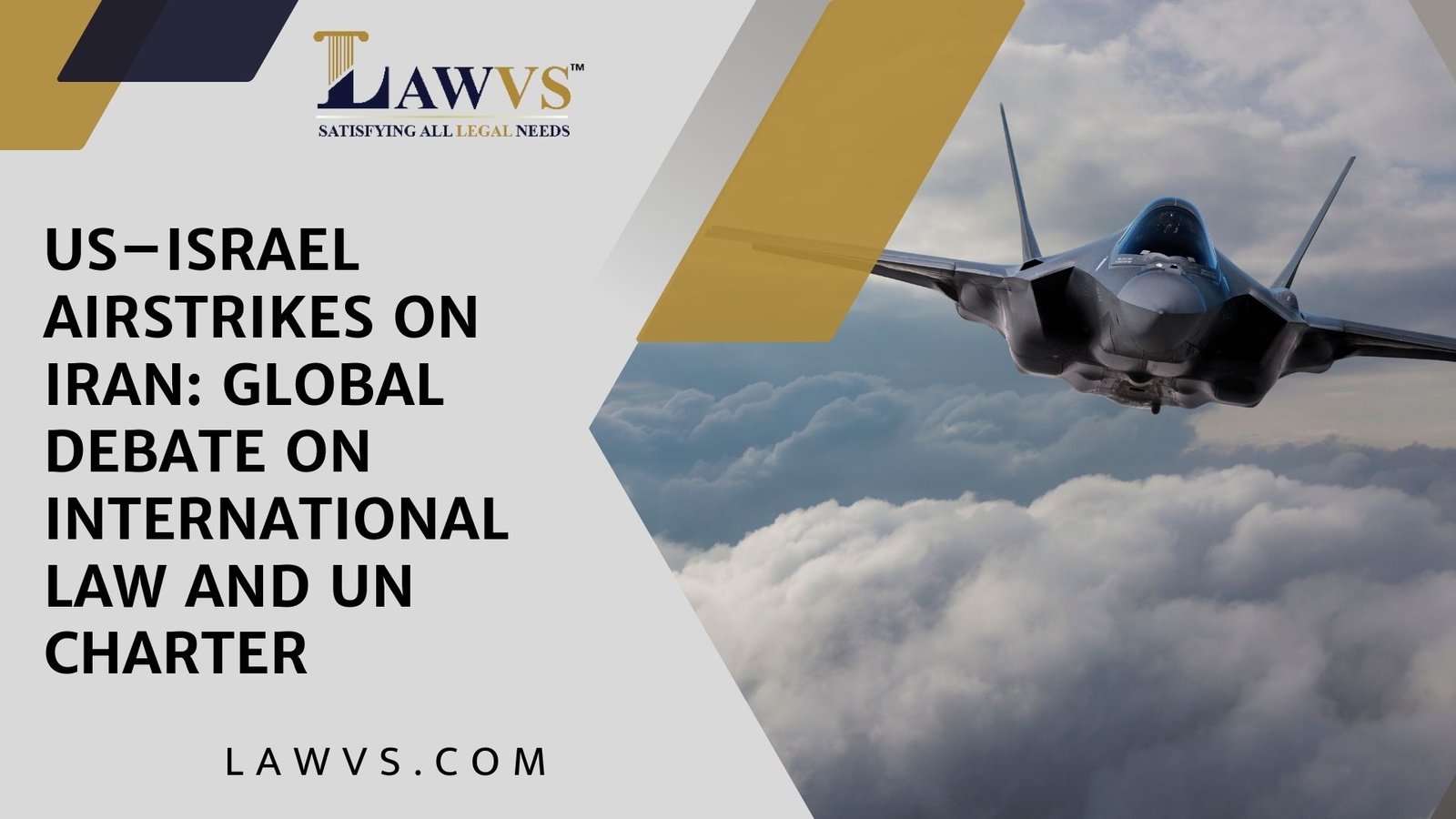
The escalation began in late February 2026 when the United States and Israel launched coordinated air and missile strikes targeting multiple military installations in Iran, including missile facilities, drone infrastructure, and strategic defence systems.
Officials from Israel and the United States stated that the operation aimed to neutralise security threats and prevent the strengthening of Iran’s military capabilities in the region. According to defence sources, the attacks focused primarily on strategic military sites believed to be linked to missile development and drone deployment.
In response, Iran strongly condemned the strikes, describing them as a violation of its sovereignty and warning that such actions could further destabilise the already volatile Middle East region.
Key Legal Issues Under International Law
1. Prohibition on the Use of Force
Under the United Nations Charter, the use of military force by one state against another is generally prohibited.
Article 2(4) of the Charter specifically requires all member states to refrain from the threat or use of force against the territorial integrity or political independence of another state.
The only recognised exceptions include:
• Self-defence under Article 51 of the UN Charter when an armed attack occurs
• Military action authorised by the United Nations Security Council
In the present case, critics argue that the strikes were not authorised by the Security Council, raising serious doubts regarding their legality under international law.
2. Debate Over Self-Defence
The United States and Israel have suggested that the strikes were necessary to counter potential security threats posed by Iran’s military activities. However, many international law scholars argue that preventive or pre-emptive attacks remain legally controversial unless there is clear evidence of an imminent armed attack.
Legal commentators have therefore questioned whether the threshold required to invoke lawful self-defence under Article 51 was satisfied in this situation.
3. International Reactions
Several European leaders and international law experts have expressed concern over the legality of the military operation. Some officials warned that bypassing the established legal framework governing the use of force could weaken the international legal order developed after the Second World War.
Diplomatic discussions have since intensified within international institutions as governments assess the legal and geopolitical implications of the strikes.
Humanitarian Law Concerns
Apart from the legality of the use of force, experts have also raised concerns regarding compliance with International Humanitarian Law, which regulates the conduct of hostilities during armed conflict.
International organisations have urged all parties involved to ensure strict adherence to the fundamental principles of:
• Distinction between civilian and military targets
• Proportionality in military operations
• Necessity in the use of force
These principles are central to protecting civilian populations and limiting the humanitarian impact of armed conflict.
Implications for the International Legal Order
The controversy surrounding the airstrikes has highlighted broader concerns about the future effectiveness of international legal norms governing the use of force.
Legal scholars note that if states increasingly rely on unilateral military action without clear legal justification, it may undermine the authority of international institutions and weaken the rules-based global system established under the United Nations Charter.
Conclusion
The airstrikes carried out by the United States and Israel against Iran have become a focal point of international legal debate. While the governments involved argue that the actions were necessary for national and regional security, critics contend that the operation raises serious concerns under the international law framework regulating the use of force.
As diplomatic discussions continue, the situation remains a critical test for the global legal order and the role of international law in maintaining international peace and security.