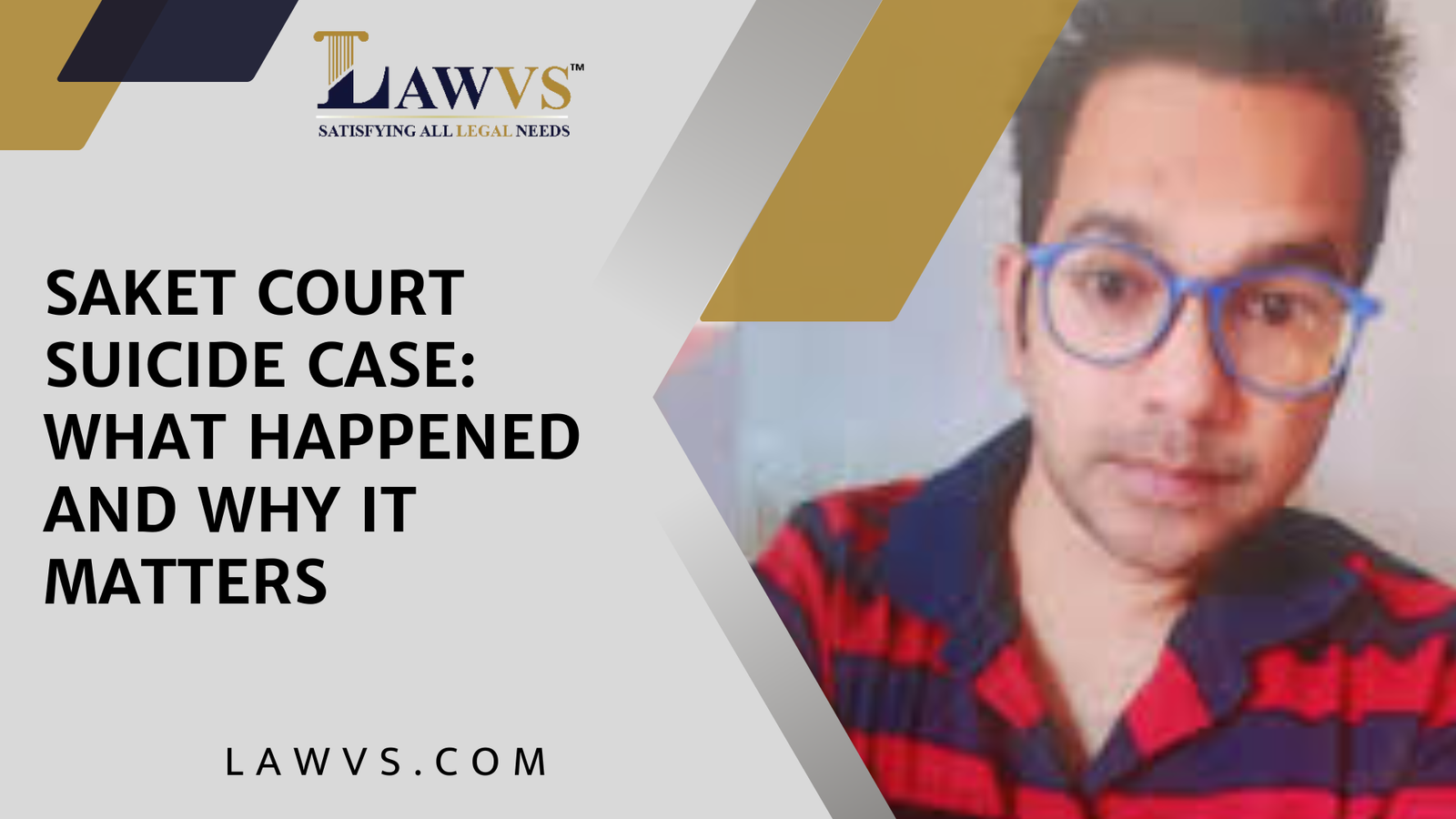
Harish Singh was a 60% differently-abled employee at Delhi’s Saket District Court, serving as an Ahlmad, a court official responsible for managing judicial records, maintaining and organizing case files, issuing summons and warrants, and assisting judges and court staff to ensure smooth daily proceedings. On 9th January 2026, Harish Singh died by suicide after jumping from the Saket Court complex in Delhi. A note he left revealed that he had been under severe work-related stress and was struggling with ongoing health issues. In his suicide noteHarish Singh wrote: “I am committing suicide due to office work pressure. I am committing suicide of my own free will; no one is responsible for it. Ever since I became an Ahlmad, I have been having suicidal thoughts. I did not share my suicidal thoughts with anyone.” He also appealed to the Delhi High Court: “I request the Hon'ble High Court to give a light seat to a handicapped person so that no one suffers like me in the future.” Under the Rights of Persons with Disabilities (RPwD) Act, 2016: Employees with disabilities have the right to inclusive and accessible workplaces. Employers must provide reasonable accommodations and lighter-duty roles when needed. People with disabilities are given preference in employment opportunities. In addition, the Mental Healthcare Act, 2017 ensures that employees can access mental health support and encourages organizations to identify and address stress before it becomes overwhelming. The incident led to protests within the court, with lawyers and staff holding a sit-in highlighting understaffing, which increases stress on employees managing multiple roles. The court confirmed that Singh had recently been posted as an Ahlmad after serving in another department. Lawyers plan to request the Delhi High Court to assign additional staff to prevent similar tragedies. This case highlights: Workplace stress and pressure, especially for differently-abled employees Need for mental health awareness and support Importance of reasonable workload distribution in courts The tragedy at Saket Court highlights the importance of mental health awareness and timely support. If you or someone you know is experiencing emotional distress, anxiety, or suicidal thoughts, help is available. The Government of India and affiliated organizations provide 24×7 confidential helplines: Tele-MANAS (National Mental Health Helpline): 14416 / 1800‑891‑4416 KIRAN Mental Health Helpline: 1800‑599‑0019 National Suicide Prevention Helpline: 1800‑121‑3667 Manodarpan (Support for students and young adults): 8448440632 NIMHANS Psychosocial Helpline: 080‑46110007 These services offer counseling, emotional support, and guidance for anyone facing mental health challenges. Remember, seeking help is a sign of strength, and timely intervention can save lives. Who was Harish Singh?
What happened to Harish Singh?
Why did Harish Singh take this step?
Are there legal protections for differently-abled employees ?
How did the Saket court and staff respond?
What is the broader issue?
What to do when you or someone you know is experiencing suicidal thoughts?
Saket Court Suicide Case: What Happened and Why It Matters